
Artículo: 9 Best Home Coffee Brewing Methods Compared
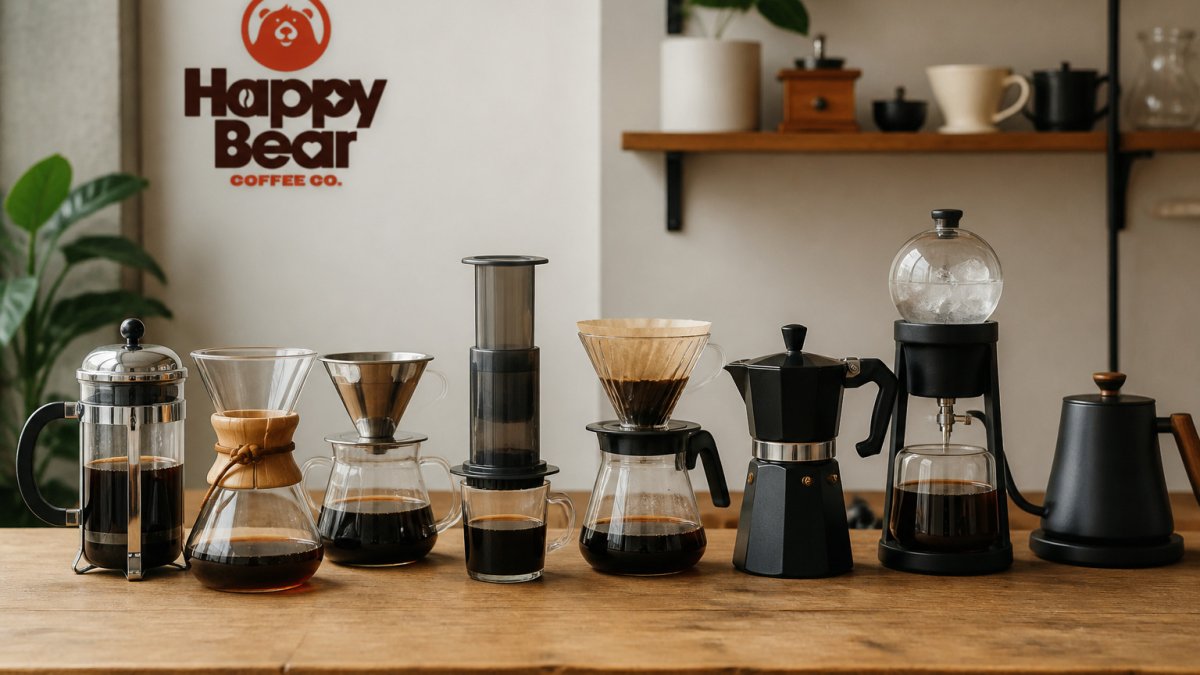
9 Best Home Coffee Brewing Methods Compared
Quick Summary
The best home coffee brewing method depends on your routine, taste, and time. Drip coffee makers suit busy mornings, pour-over delivers clean and controlled flavor, French press gives a full body, and cold brew produces a smooth, low-acid concentrate. Match the method to how much time you want to spend at the counter.
- Drip coffee makers are hands-off and can be set on a timer for busy mornings.
- Pour-over steeps for about three to four minutes and rewards hands-on practice.
- French press uses a coarse grind and a four-minute steep for a richer body.
- Cold brew steeps 12 to 18 hours and must be diluted before drinking.
- Adjust grind size before anything else when your coffee tastes off.
Table of Contents
- Which Home Brewing Method Fits Your Routine
- 1. Drip Coffee Maker: Easiest Everyday Option
- 2. Pour-Over: Clean, Controlled Flavor
- 3. French Press: Full-Bodied Immersion Brewing
- 4. Cold Brew: Smooth Coffee Concentrate
- Coffee Grind Size Guide for Each Method
- Coffee Brewing Equipment Essentials
- How to Brew Better Coffee: Troubleshooting Common Problems
- Choosing Your Next Brewer at Happy Bear Coffee
- Frequently Asked Questions
Last Updated: November 4, 2026
Happy Bear Coffee has brewed a lot of cups over the years, and the question we hear most is simple: which home coffee brewing method should you pick? The honest answer depends on your routine, your taste, and how much time you want to spend at the counter. Below, we break down the main home coffee brewing methods, explain what each one does well, and show you where each one falls short.
Drip coffee makers are a favorite method for busy mornings. But convenience is only one factor. Flavor, equipment cost, and cleanup all matter, and a method that suits a commuter may frustrate a weekend tinkerer.
Many home brewers feel overwhelmed by the choices, so we keep this guide practical. Each method gets a short verdict, a few specifics, and a clear sense of who it suits best.
Which Home Brewing Method Fits Your Routine
The right method comes down to four questions: how much time you have, how much skill you want to build, how many cups you need, and what flavor profile you like. Most guides stop there. A decision framework is more useful, so use the matrix below to narrow the field before you read a single method description.
| Your priority | Best first pick | Why it fits | Watch for |
|---|---|---|---|
| Fastest weekday mornings | Drip coffee maker | Hands-off, timer-ready, brews a full pot in minutes | Flavor flattens if the water isn't hot enough |
| Cleanest, most layered flavor | Pour-over | Direct control of temperature, pour speed, and time | Needs attention and practice |
| Richest body with no filters | French press | Oils pass through the mesh for a heavy mouthfeel | Sediment and over-extraction if left too long |
| Smooth, low-acid concentrate | Cold brew | Long steep, almost no active effort | Requires 12-18 hours of planning |
| Smallest counter footprint | Pour-over or AeroPress-style brewer | One cone or cylinder, minimal gear | Small batch size per brew |
| Lowest ongoing cost | French press | No paper filters to replace | Coarse grind matters more |
| Largest batch for a household | Drip coffee maker or cold brew | Scales to a full pot or a week of concentrate | Freshness fades after a few days |
Time. If you have under five minutes of active attention, automatic drip or cold brew (made the night before) wins. If you enjoy a ten-minute ritual, pour-over rewards the effort. French press sits in the middle: four minutes of steeping with almost no hands-on work.
Skill. Every method here is learnable in a week. Pour-over has the steepest curve because pour speed and bloom timing change the cup. Drip and cold brew are the most forgiving for beginners. A burr grinder and a kitchen scale do more for consistency than any single brewer.
Serving size. A single-cup brewer suits one drinker; a drip machine or a cold brew batch suits a household. Cold brew concentrate is the most efficient way to serve several people cold coffee across a week.
Budget. Entry equipment ranges widely, but the practical split is between methods that need paper filters (drip, pour-over) and those that don't (French press, cold brew). Factor filter cost into the ongoing total, not just the brewer price.
Flavor preference. If you want clarity and acidity, choose paper-filtered methods. If you want body and sweetness, choose metal-filtered immersion. If you want low acidity, choose cold brew. There is no universally best method; the choice is a matter of taste matched to routine.
Use the matrix to pick two candidates, then read those sections closely.
1. Drip Coffee Maker: Easiest Everyday Option
A drip coffee maker is the most common home brewer for good reason. You add grounds and water, press start, and walk away. Most models brew a full pot in a few minutes, which makes them ideal for households and offices.
Pros:
- Hands-off brewing with a timer for the morning
- Consistent results once the ratio is dialed in
- Handles larger batches easily
Cons:
- Flavor can flatten if the water isn't hot enough
- Paper filters add ongoing cost
How to brew: Use a medium grind, roughly one to two tablespoons of coffee per six ounces of water, and rinse the paper filter before adding grounds.
2. Pour-Over: Clean, Controlled Flavor
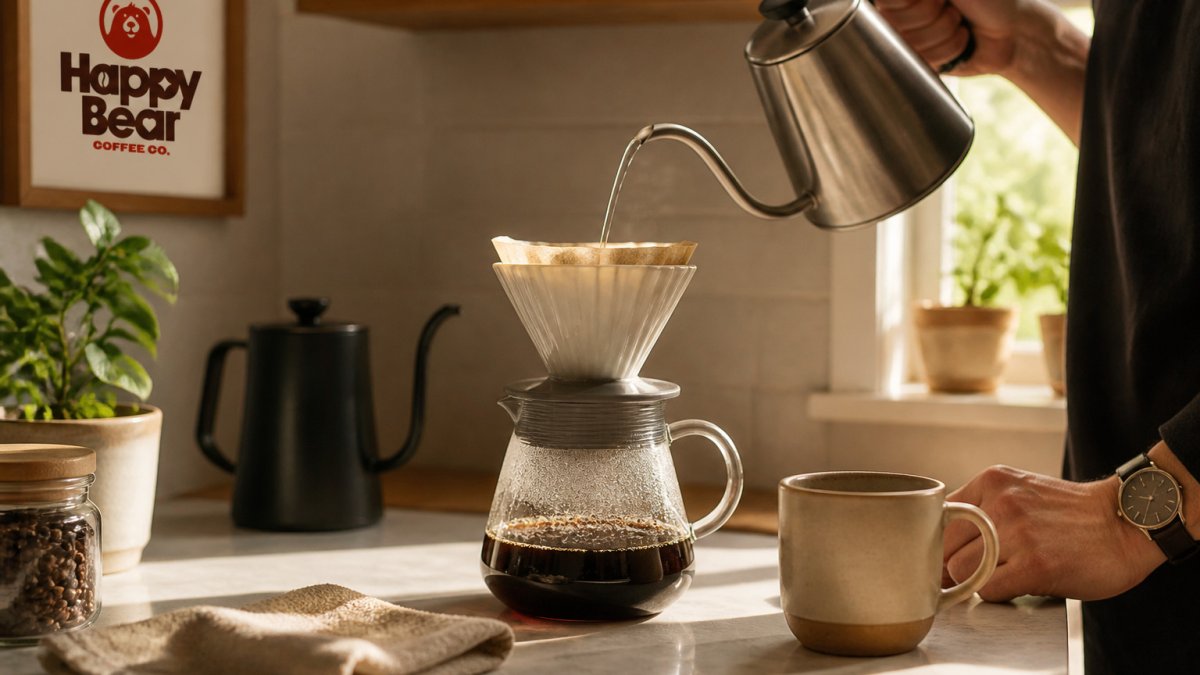
Pour-over gives you direct control over every variable: water temperature, pour speed, and brew time. The result is often a bright, clean cup that highlights the character of single-origin beans.
Pros:
- Clear, layered flavor
- Inexpensive equipment
- Satisfying ritual for hands-on brewers
Cons:
- Takes attention and practice
- Slower than automatic methods
How to brew: Place a paper filter in the cone, rinse it, add medium-fine grounds, then pour in slow circles, letting the bed bloom before continuing. Aim for a total brew time of about three to four minutes.
The BruTrek Collapsible Pour Over Coffee Maker, priced at $50.00, folds down for travel and reduces reliance on disposable filters. You can see the collapsible pour-over maker on our site.

Coffee brewing method overview from the National Coffee Association
3. French Press: Full-Bodied Immersion Brewing
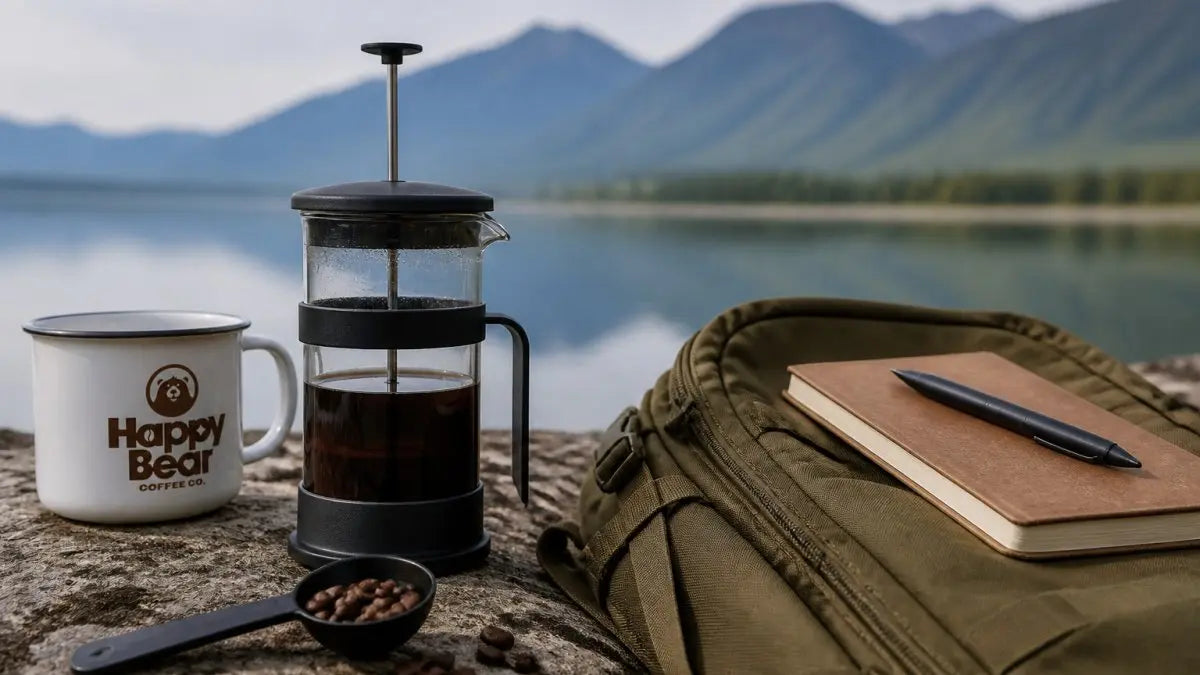
French press steeps coffee directly in water, then separates grounds with a metal mesh plunger. It produces a heavier body and richer mouthfeel than paper-filtered methods, because oils pass through the filter.
Pros:
- Full body and rich texture
- Simple, no special skills needed
- No paper filters required
Cons:
- Leaves more sediment in the cup
- Coffee can over-extract if left too long
How to brew: Use a coarse grind, about one ounce of coffee per 15 ounces of water, steep for four minutes, then press slowly and serve immediately.
Brutrek French Press with Bru-Stop™ →
For a sturdier option, the Brutrek French Press with Bru-Stop, priced at $69.00, is built from stainless steel with a double-walled design that keeps coffee hot. The Travel Coffee Press from OVRLNDR, at $58.00, brings the same approach on the road.

4. Cold Brew: Smooth Coffee Concentrate
Cold brew steeps coarse grounds in cold water for many hours, usually 12 to 24. The long, gentle extraction produces a smooth, low-acid concentrate that works hot or iced.
Pros:
- Smooth flavor with low acidity
- Concentrate keeps for days in the refrigerator
- Almost no active effort during steeping
Cons:
- Requires planning ahead
- Concentrate must be diluted before drinking
How to brew: Combine coarse grounds and cold water at about one part coffee to four or five parts water, steep 12 to 18 hours, filter, and dilute to taste.
The Toddy Home Cold Brew System, at $49.99, is a nonelectrical brewer designed for exactly this method. If you want a ready-made option, Smokey Bear's Cold Brew, a blend of medium and dark roast with notes of caramel and dark chocolate, is priced at $19.00.

Coffee Grind Size Guide for Each Method
Grind size is the variable most home brewers underestimate. Match it to your method and results improve immediately.
| Method | Grind Size | Approx. Brew Time |
|---|---|---|
| Drip coffee maker | Medium | 4-6 minutes |
| Pour-over | Medium-fine | 3-4 minutes |
| French press | Coarse | 4 minutes |
| Cold brew | Coarse | 12-18 hours |
Too fine a grind for French press leaves bitter sediment. Too coarse a grind for pour-over tastes thin and sour. If your coffee tastes off, adjust grind size before anything else. For a hand grinder that covers both ends of the range, see our BruTrek Hand Coffee Grinder, priced at $160.00.
For a deeper look at grinders, 5 Best Coffee Grinders for Home Brewing in 2026 compares models by grind range and build.
Coffee Brewing Equipment Essentials
You don't need a full bar of gear to brew well, but the four essentials below do most of the work. Each one earns its place because it removes a variable you would otherwise guess at.
A burr grinder. Blade grinders chop unevenly, which produces both bitter and sour particles in the same dose. A burr grinder gives a consistent particle size, and consistency is the single biggest lever on cup quality. Hand burr grinders cover the full range from coarse French press to medium-fine pour-over; electric burr grinders trade price for speed. For a hand grinder that covers both ends of the range, see our BruTrek Hand Coffee Grinder, priced at $160.00.
A kitchen scale. Scooping coffee is the most common source of inconsistency. A scale lets you weigh dose and water in grams so a recipe repeats. Weighing both coffee and water is a common way to make a cup taste the same every morning.
A thermometer or temperature-controlled kettle. Water that is too cool under-extracts and tastes sour; water that is too hot scorches and tastes bitter. A kettle with temperature control removes the guesswork, and a simple thermometer does the same job for less.
The brewer that matches your routine. Buy for the method you actually drink every week, not the one you imagine trying.
Total Cost of Ownership
The brewer price is only the first cost. Compare methods on what you spend over a year:
- Filters. Drip and pour-over need paper filters replaced regularly; French press and cold brew need none. A reusable metal or cloth filter cuts ongoing cost but changes the cup.
- Cleaning effort. French press screens and cold brew filter bags trap oils and need thorough rinsing; drip machines need descaling every few months; pour-over cones rinse in seconds.
- Durability and replacement parts. Glass carafes and press beakers break and are replaceable; stainless steel bodies last longer but cost more up front. Check that replacement carafes, filters, and gaskets are available before you buy.
- Energy. Drip machines and electric kettles draw power; French press, pour-over, and cold brew need only a kettle or none at all.
Accessibility and Ease of Use
Not every method suits every household. Drip coffee makers are the easiest for people with limited time, dexterity, or counter space, since the process is load-and-press. Pour-over demands a steady hand and standing time. French press needs a firm, slow plunge. Cold brew needs planning the night before but almost no active work. If counter space is tight, a collapsible pour-over or a single-cup immersion brewer stores easily.
Check filter availability and replacement-part support before you buy a brewer.
For a deeper look at grinders, 5 Best Coffee Grinders for Home Brewing in 2026 compares models by grind range and build.
How to Brew Better Coffee: Troubleshooting Common Problems
Most home brewing problems trace back to a few causes:
- Sour or weak coffee: Usually under-extraction. Grind finer, brew longer, or use hotter water.
- Bitter or harsh coffee: Usually over-extraction. Grind coarser, shorten the brew, or lower the temperature.
- Muddy sediment: Grind too fine for the method, or a press that needs a cleaner screen.
- Inconsistent cups: Weigh your coffee and water instead of scooping.
Change one variable at a time so you can see what actually improved the cup.
Choosing Your Next Brewer at Happy Bear Coffee
Pick the method that matches your mornings, then refine your grind and ratio until the cup tastes right. If you want to try several methods, start with a French press or pour-over, since both are inexpensive and teach you a lot about extraction.
At Happy Bear Coffee, we carry the brewers and beans to get you started, from the Collapsible Pour Over Coffee Maker to the Toddy Home Cold Brew System. Browse the full selection and find the setup that fits your routine.
Frequently Asked Questions
What is the most effective way to brew coffee at home?
No single method wins for everyone. Drip machines are the easiest for daily use, pour-over gives the most control over flavor, and French press delivers a heavier body with little equipment. Choose based on how many cups you brew, how much time you have in the morning, and how much hands-on attention you want to give each cup. Happy Bear Coffee's BruTrek Collapsible Pour Over Coffee Maker ($50.00) and Brutrek French Press with Bru-Stop ($69.00) cover two of the most popular options.
How does grind size affect different coffee brewing methods?
Grind size controls how quickly water extracts flavor from the grounds. Fine grounds extract fast and suit short brew times, while coarse grounds extract slowly and suit long immersion. Pour-over typically calls for a medium-fine grind, drip for medium, and French press for coarse. If your coffee tastes sour, try a finer grind. If it tastes bitter or harsh, try a coarser one. The BruTrek Hand Coffee Grinder ($160.00) has an adjustable gasket that lets you move between settings for different methods.
Which is better for making coffee, a percolator or a French press?
A French press usually produces a fuller, oilier cup because the grounds steep directly in the water and the metal mesh lets oils pass through. A percolator recirculates boiling water through the grounds, which can over-extract and make coffee taste bitter. For most home drinkers, French press is the better choice for flavor, while a percolator suits people who want a large batch with minimal attention. Happy Bear Coffee's Travel Coffee Press ($58.00) brews 24 fl. oz. and keeps coffee hot for hours.
What are the best brewing methods for beginners?
Drip coffee makers and French presses are the simplest starting points. A drip machine needs only water, coffee, and a filter, and it brews consistently with almost no technique. A French press requires just measuring, steeping for about four minutes, and pressing. Pour-over offers better flavor control but takes more practice with water pouring speed and temperature. Cold brew is also beginner-friendly because it needs only coarse grounds, water, and time, though it takes around 12 to 24 hours to steep.


Dejar un comentario
Este sitio está protegido por hCaptcha y se aplican la Política de privacidad de hCaptcha y los Términos del servicio.