
Artículo: 5 Best Coffee Grinders for Home Brewing in 2026
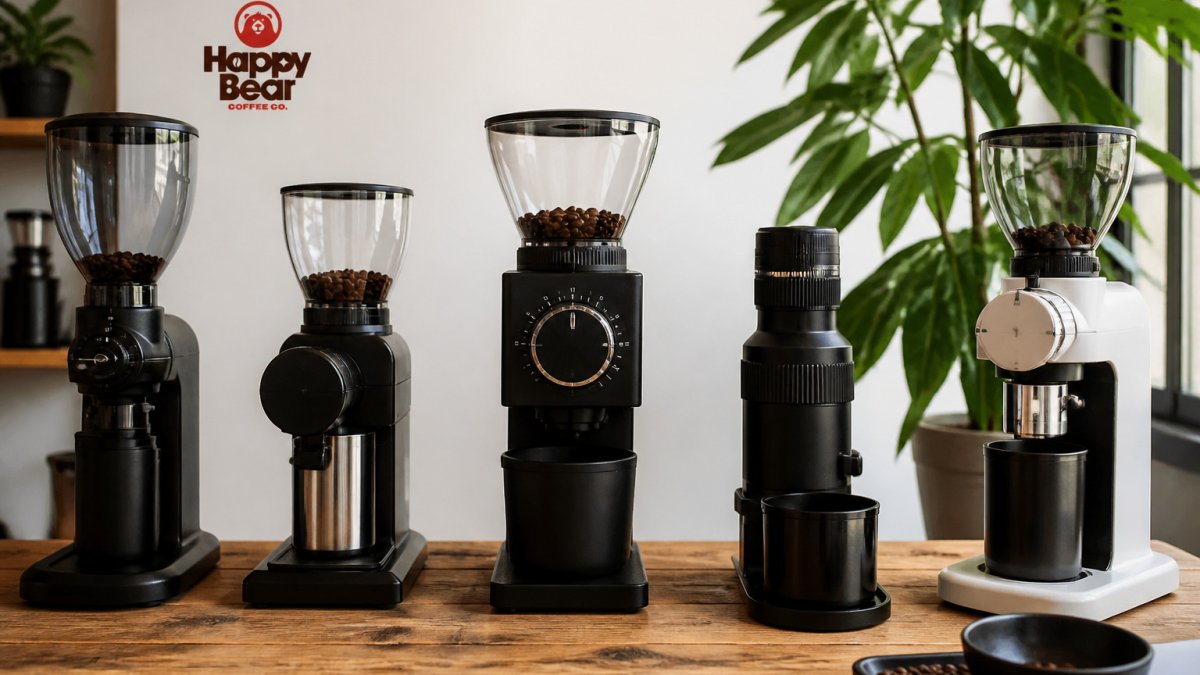
5 Best Coffee Grinders for Home Brewing in 2026
Last Updated: November 1, 2026
Quick Summary
The best coffee grinders for home brewing are burr grinders, because they crush beans between two abrasive surfaces to produce a far more uniform grind than blade grinders. Consistent particle size lets water extract flavor evenly, so choose a burr grinder that matches your brewing method and offers reliable grind adjustment.
- Grind consistency drives extraction, so uniform particles produce a more balanced cup.
- Blade grinders chop beans into a wide mix of sizes, which makes home brews taste uneven.
- Choose a grinder based on the brewing methods you use most, such as espresso or French press.
- If your cup tastes sour, grind finer; if it tastes bitter, grind coarser.
- Clean your grinder regularly, since coffee oils and residue can transfer stale flavors to fresh beans.
Table of Contents
- Why Your Grinder Matters More Than Your Beans
- Burr vs Blade Coffee Grinder: Which Type Wins at Home
- Conical vs Flat Burr Grinders and How Each Affects Flavor
- How to Choose a Coffee Grinder for Your Brewing Method
- Coffee Grind Size Chart for Beginners
- Budget vs Premium Grinders: What Your Money Buys
- Manual vs Electric Grinders for Home Use
- How to Clean a Coffee Grinder and How Often to Do It
- Booking Your Next Grinder and Finding a Brewing Kit That Fits
- Frequently Asked Questions
Why Your Grinder Matters More Than Your Beans
The lesson we return to most often is simple: a great set of coffee grinders matters more than most people expect. Freshly roasted beans can taste flat or harsh if they're ground unevenly, and the grinder is the tool that decides how even the grounds are. Choosing the right one from the many coffee grinders on the market is the single most useful upgrade you can make to your daily cup.
Grind consistency drives extraction. When particles are uniform, water pulls flavor out at the same rate across the whole batch. When sizes vary, fine particles over-extract and turn bitter while coarse pieces stay weak and sour. Blade grinders chop beans into a wide mix of sizes, which is why so many home brews taste uneven.
Burr vs Blade Coffee Grinder: Which Type Wins at Home
For most home brewers, a burr grinder wins. Burr grinders crush beans between two abrasive surfaces set a fixed distance apart, which produces a far more uniform grind. Blade grinders spin a propeller-like blade that smashes beans at random, leaving dust and chunks in the same batch.
Blade grinders are cheaper and compact, and they can handle spices in a pinch. But you cannot dial in a precise grind size with them, so they suit drip brewing only loosely. If you care about pour-over, French press, or espresso, a burr grinder is the practical choice. You can also try a hand-operated burr grinder to compare the difference yourself.

Watch out: Blade grinders make it tempting to grind longer for "finer" results. The longer you run them, the more dust and heat you create, and the more bitter your cup becomes.
Conical vs Flat Burr Grinders and How Each Affects Flavor
Burr grinders come in two main shapes. Conical burrs use a cone-shaped inner burr nested inside a ring, while flat burrs use two parallel discs. Both produce consistent grounds, but they behave differently.
How to Choose a Coffee Grinder for Your Brewing Method
Your brewing method should set your grinder priorities. You can also browse coffee organized by brewing method to match beans to your setup. Espresso needs very fine, stepless adjustment and a motor strong enough to grind slowly without heating the beans. Pour-over and drip need a medium-fine grind with reliable repeatability. French press and cold brew need coarse, even grounds that won't slip through a filter.
Start by listing the methods you use most. For a beginner-friendly burr grinder, see our guide to choosing one. If you brew mostly drip, look for a grinder with steady medium settings. If you want to try several methods, choose one with a wide, clearly marked range and easy micro-adjustments so switching doesn't mean starting from scratch.
Hopper capacity matters too. A small hopper suits a single daily cup, while a larger one saves refills if you brew for a household.
Coffee Grind Size Chart for Beginners
Use this table as a starting point, then adjust by taste. For guidance on which beans suit this method, see best coffee beans for French press. Grind size changes the speed of extraction, so if your cup tastes sour, go finer; if it tastes bitter, go coarser.
| Brewing Method | Grind Size | Typical Brew Time |
|---|---|---|
| Cold brew | Very coarse | 12 to 24 hours |
| French press | Coarse | 4 minutes |
| Pour-over | Medium-fine | 2 to 4 minutes |
| Drip machine | Medium | 4 to 6 minutes |
| Espresso | Fine | 25 to 30 seconds |
Change one variable at a time. Adjust the grind before changing your coffee-to-water ratio so you can see which change made the difference.
Budget vs Premium Grinders: What Your Money Buys
What actually justifies the upgrade. Pay more when you need finer adjustment for espresso, when you switch brewing methods often and need repeatable settings, or when you plan to keep the grinder for many years and want replaceable burrs. To see what quality beans deliver, try the Tanzania Peaberry Punch. Stay in the entry or mid tier when you brew one method, grind the same dose daily, and value simplicity over micro-adjustment.
Manual vs Electric Grinders for Home Use
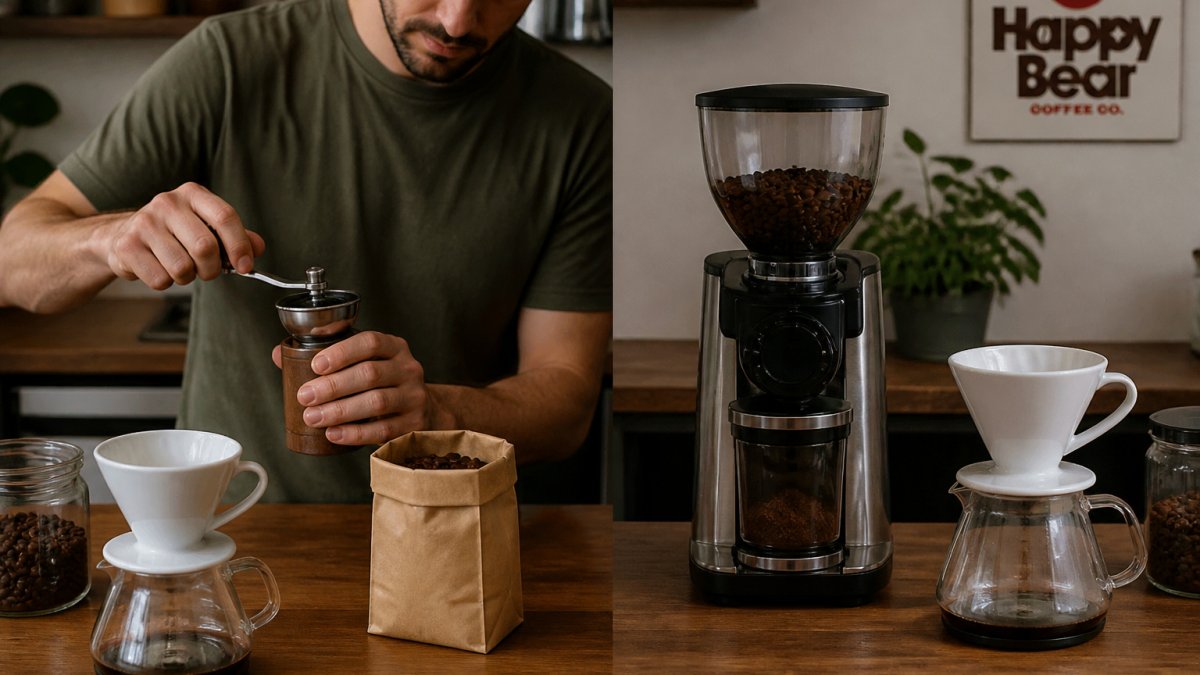
Most comparisons stop at "manual is quiet, electric is fast." That framing misses the variables that actually shape a daily routine: noise output, retention, dosing mess, and how long the grinder takes to produce a single dose.
BruTrek® Hand Coffee Grinder →
Noise.
Retention and static. Manual grinders typically retain very little coffee because the grounds fall straight from the burrs into the catch cup, and many designs let you tap out the last gram.
Speed and workflow. A manual grinder takes roughly 30 seconds to a couple of minutes to produce a single dose, depending on grind fineness and bean density; coarse grinds for French press take longer than fine grinds for espresso. Electric grinders finish a dose in seconds. For one cup a day, the manual time cost is small and many brewers enjoy the ritual. For a household brewing several cups, or for anyone grinding coarse batches for cold brew, the time adds up quickly.
How to decide. Choose manual if you grind one or two doses at a time, value quiet operation, travel with your gear, or want a low-maintenance tool with few failure points. Choose electric if you brew for several people, grind coarse batches regularly, or want repeatable settings you can return to without counting turns.
How to Clean a Coffee Grinder and How Often to Do It
Coffee oils and fine particles build up inside a grinder over time. That residue can turn stale and transfer rancid flavors into fresh beans, so regular cleaning keeps your cup tasting right.
Brush out loose grounds after each use. Every few weeks, remove the hopper and burrs as your model's manual allows, and clean them with a stiff brush. Avoid soap and water on burrs unless the manual says it's safe, since moisture can cause rust and clumping. If you brew daily, a monthly deep clean is a sensible habit.
Watch out: Never grind rice or sugar to clean a burr grinder unless your manual approves it. These can damage burrs or leave residue that alters flavor.
Booking Your Next Grinder and Finding a Brewing Kit That Fits
Once you know which grinder suits your method and budget, the next step is picking the right accessories. Happy Bear Coffee's BruTrek® Hand Coffee Grinder, priced at $160.00, is built for camping and travel, with a 32 to 40 gram capacity depending on coffee bean density and an adjusting gasket that moves from espresso-style grinds to smooth pour-overs. Its precision-engineered stainless steel burrs and rugged construction make it a strong choice if you brew outdoors as well as at home.
Pair any grinder with beans suited to your method.
Ready to pick your next grinder? Shop Happy Bear Coffee's brewing gear and bean selection, and put the grind size chart above to work with your favorite beans.
Frequently Asked Questions
Is a burr grinder really better than a blade grinder?
For most home brewers, yes. Burr grinders crush beans between two abrasive surfaces, which produces a more uniform particle size. Blade grinders chop beans unevenly, leaving a mix of fine dust and large chunks that extract unevenly and taste harsh or flat. The consistency gain is the main reason coffee professionals recommend them. If you brew pour-over or French press, where grind size changes flavor directly, a burr grinder is the practical upgrade.
What is the difference between flat burr and conical burr grinders?
Flat burr grinders use two parallel ring-shaped surfaces, which tends to produce a very even grind with a narrow particle spread. Conical burr grinders use a cone-shaped inner burr inside a ring, which typically runs cooler and at lower speeds and is common in home models. Both can produce excellent coffee. Choose based on your brewing method and budget rather than burr shape alone.
How do I choose the right grind size for my brewing method?
Start coarse for methods with long contact time, such as French press and cold brew, and go finer for shorter brews like espresso. Pour-over and drip sit in the middle. Adjust in small steps and taste each cup, since a grinder with more settings gives you finer control. A stepped or stepless adjustment both work, but stepless models make dialing in easier. Keep a brew log so you can repeat the settings that taste best with each bean.
How often should I clean my coffee grinder?
Brush out grounds and oils after every few brews, and do a deeper cleaning about once a month if you brew daily. Oils and fines build up on the burrs and can turn stale coffee into bitter flavors. Remove the hopper and burrs as your model allows, brush them dry, and use a grinder cleaning tablet or uncooked rice only if the manufacturer approves it. Never submerge electric grinder bodies in water.



Dejar un comentario
Este sitio está protegido por hCaptcha y se aplican la Política de privacidad de hCaptcha y los Términos del servicio.