
게시글: Benefits of Single Origin Coffee Beans: 2026 Guide
Benefits of Single Origin Coffee Beans: 2026 Guide
Table of Contents
- What Single Origin Coffee Actually Means
- Single Origin vs Blend Coffee: What Changes in Your Cup
- Flavor Profile, Cupping Notes, and Why Terroir Matters
- Specialty Coffee Sourcing Transparency and Traceability
- How to Brew Single Origin Coffee Without Wasting Good Beans
- Antioxidants, Acidity, and What the Health Claims Get Right
- Storage and Freshness: Keeping Whole Bean Coffee at Its Peak
- What Single Origin Coffee Means for Farmers and Growing Regions
- Frequently Asked Questions
Last Updated: September 19, 2026
What Single Origin Coffee Actually Means
Single origin coffee is coffee traced to one specific place: a single farm, a single cooperative, or a single growing region within one country. That's the whole definition, and it's where the confusion starts.
This guide from Happy Bear Coffee covers what actually changes when you brew a single origin coffee instead of a blend, from flavor to freshness to how the money flows back to the farm. Most guides stop at "it tastes better." That's not the interesting part.
The interesting part is that single origin coffee is a transparency claim before it's a flavor claim. According to the Specialty Coffee Association's research on green coffee classification, origin designation depends on documented traceability rather than marketing language. A washed Ethiopian micro-lot and a washed Colombian micro-lot are both single origin, and they taste nothing alike.
That distinction matters because it tells you what you're actually buying: a record of where the beans came from, not a promise about how they'll taste.
Single Origin vs Blend Coffee: What Changes in Your Cup
The single origin vs blend coffee question comes down to predictability versus character. Blends are engineered for consistency. Single origins are selected for distinctiveness.
A roaster building a blend picks components to hit a target flavor, then adjusts the recipe as harvests change. That's why your favorite house blend tastes roughly the same year-round. Single origin coffee can't do that. The 2026 crop from a specific hillside will taste different from the 2025 crop, sometimes noticeably.
| Factor | Single Origin | Blend |
|---|---|---|
| Flavor consistency | Varies by harvest | Engineered to stay stable |
| Traceability | Farm or region level | Component level, rarely disclosed |
| Best for | Pour-over, filter, tasting | Espresso, milk drinks, daily drip |
| Price sensitivity | Higher, tied to micro-lot scarcity | Lower, buffered by cheaper components |
Here's the part most guides skip: blends exist partly because single origins are hard to work with. A bright, high-acidity Ethiopian natural can taste thin and sour in a milk drink. Blending it with a heavier Brazilian coffee fixes that. Neither approach is better. They solve different problems.
Flavor Profile, Cupping Notes, and Why Terroir Matters
Terroir is the sum of everything that shaped the coffee cherry before it was picked: altitude, soil, rainfall, shade, varietal, and processing method. It's the reason two coffees grown 20 miles apart can taste completely different.
Altitude is the single biggest lever. Higher-grown coffee cherries mature more slowly, developing more sugars and complexity. That's why so much specialty coffee comes from mountainous terrain within the coffee belt, the equatorial band where coffee actually grows.
Processing method shapes the flavor profile just as much:
- Washed process: Clean, bright, defined acidity. Terroir reads clearly.
- Natural process: Fruit-forward, heavier body, notes of fruit and fermented sweetness.
- Honey process: A middle ground, with sweetness and body between the two.
Cupping notes are the vocabulary roasters use to describe what they taste: floral undertones, stone fruit, citrus, cocoa. They're not marketing fluff, but they are subjective. Two cuppers can score the same coffee differently and both be right. When you read "notes of fruit" on a bag, treat it as a direction, not a guarantee.
Specialty Coffee Sourcing Transparency and Traceability
Specialty coffee sourcing transparency is the practice of documenting and disclosing where beans came from and how they were traded. The more specific the disclosure, the more you can verify.
Traceability operates on a spectrum. At the loose end, "single origin" might mean only that the beans came from one country. At the tight end, a micro-lot trace might name the farm, the elevation, the varietal, the processing method, and the harvest season.
Direct trade arrangements, where a roaster buys straight from a producer or cooperative, tend to produce the most detailed records. Fair trade certification sets a floor price and social standards, which matters, but it doesn't guarantee quality or traceability at the farm level. The two systems answer different questions.
What should you actually look for on a bag? Farm name, region, altitude, varietal, and processing method. If a roaster can't tell you those things, the "single origin" label is doing very little work.
How to Brew Single Origin Coffee Without Wasting Good Beans
Brewing single origin coffee well means controlling variables so the bean's character comes through instead of getting buried. Good beans are expensive. Bad brewing wastes them.
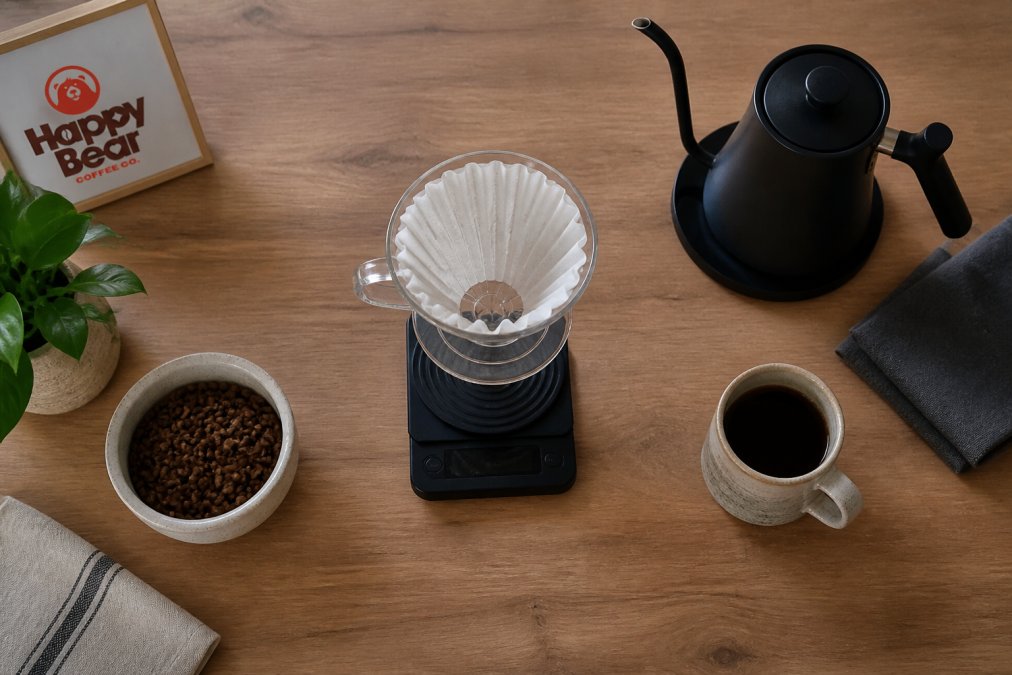
Start with a 1:16 ratio by weight, one gram of coffee to sixteen grams of water. Weigh everything. Volume scoops are inconsistent, and inconsistency is how you lose a $25 bag of beans to guesswork.
Grind size should match your method:
- Pour-over: medium-fine, like table salt
- French press: coarse, like breadcrumbs
- Drip machine: medium, and replace the paper filter if it's been sitting open
Water temperature matters more than most people admit. Somewhere between 195°F and 205°F extracts sweetness without pulling out bitterness. If your coffee tastes sour and thin, your water is likely too cool or your grind too coarse. If it tastes bitter and drying, go the other direction.
One more thing: let the coffee rest. Beans roasted within the last few days off-gas carbon dioxide, which makes them brew unevenly. A rest of several days after the roast date usually produces a more stable cup.
Match the Brewer to the Origin
This is the part almost every guide skips. A single origin is not a universal bean, it is a specific flavor profile, and some brewers flatter that profile while others flatten it. The general rule: the more delicate and aromatic the coffee, the more you want a paper-filtered, full-immersion or slow-pour method that preserves clarity. The heavier and more fruit-forward the coffee, the more a metal-filtered or pressure method can lean into body.
| Origin style | Flavor signature | Best brewers | Avoid |
|---|---|---|---|
| Washed East African (Ethiopia, Kenya) | Floral, citrus, tea-like, high acidity | V60, Chemex, Kalita Wave | French press, moka pot |
| Washed Central/South American (Colombia, Guatemala, Peru) | Caramel, red apple, balanced | V60, drip machine, AeroPress | Very coarse French press |
| Natural-process African or Brazilian | Berry, stone fruit, winey, heavy body | AeroPress, French press, espresso | Chemex (filter clogs, mutes fruit) |
| Honey-process Latin American | Brown sugar, soft fruit, medium body | AeroPress, drip, V60 | Nothing in particular, very forgiving |
| Indonesian (Sumatra, Java) | Earthy, cedar, low acidity, syrupy | French press, moka pot, espresso | Chemex (muddies the cup) |
A few concrete pairings worth trying:
- Ethiopian washed Yirgacheffe on a V60. The paper filter traps oils and lets the jasmine and bergamot notes read cleanly. A French press turns the same beans into a muddy, less articulate cup.
- Kenyan washed AA on a Chemex. The thick Chemex filter tames Kenya's famously sharp blackcurrant acidity into something more structured.
- Brazilian natural on an AeroPress. Short steep, fine grind, low pressure, the fruit and chocolate notes concentrate instead of getting diluted.
- Sumatran wet-hulled on a French press. The metal mesh keeps the heavy body and earthy notes intact; a paper filter strips too much of what makes Sumatra distinctive.
Espresso Is Its Own Problem
Espresso amplifies everything, acidity, bitterness, and any inconsistency in the roast. A bright washed Ethiopian that sings as pour-over can pull as a thin, sour shot because the pressure and short contact time don't extract the same compounds. If you want espresso from a single origin, look for roasters who explicitly label a bean as espresso-appropriate, and expect to dial in the grind more aggressively than you would with a blend built for the purpose.
Antioxidants, Acidity, and What the Health Claims Get Right
Coffee contains antioxidants, particularly chlorogenic acids, and those compounds are more concentrated in lighter roast levels. That part of the health conversation is legitimate.
The overstated part is treating single origin coffee as a health product. Roast level affects antioxidant content more than origin does. A light-roasted blend will generally carry more chlorogenic acids than a dark-roasted single origin, because darker roasting degrades those compounds. If antioxidants are your reason for buying, roast level is the variable to watch.
Acidity deserves its own correction. The "acidity" in coffee tasting notes describes a bright, lively sensation on the palate, not the pH of the liquid. Coffee is mildly acidic regardless of origin. People who report stomach sensitivity often respond to roast level or brewing strength rather than to single origin coffee specifically. If a darker roast sits better with you, drink the darker roast.
What single origin coffee genuinely offers on the health front is control: fewer unknown components, clearer sourcing, and a cup you can actually evaluate rather than just consume.
How to Actually Taste What You Bought
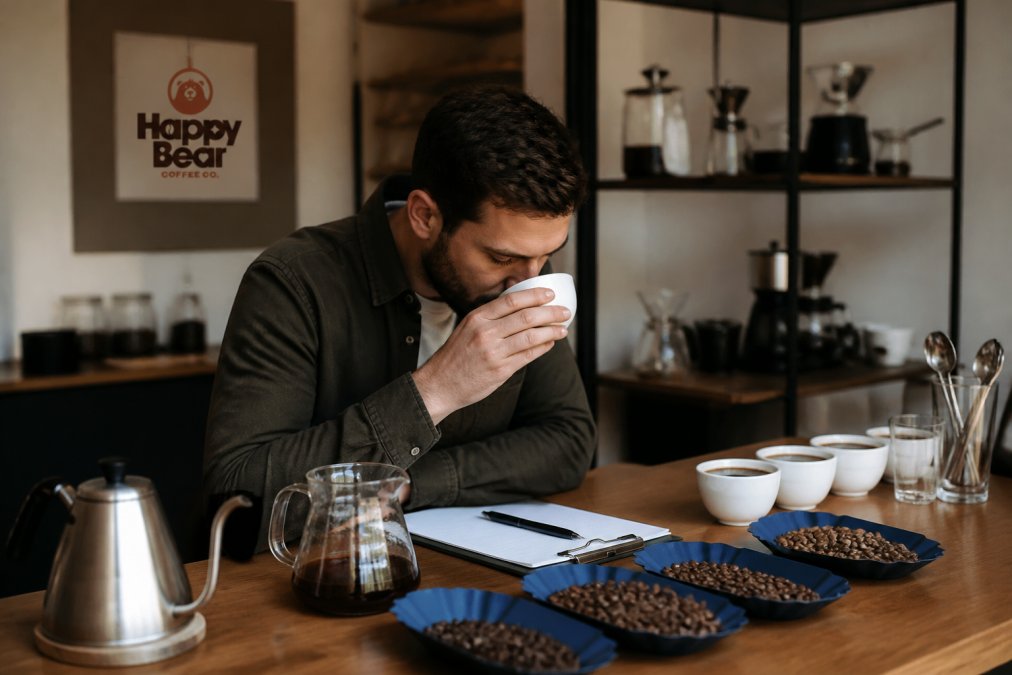
If you are paying a premium for a named micro-lot, you should be able to describe what makes it different from the bag you finished last month. That skill is called cupping, and you can do a simplified version at home without any special equipment beyond what you already own for brewing.
A home cupping setup:
- Two or three coffees you want to compare, ground coarse (like French press)
- Identical mugs or small bowls, one per coffee
- A kettle of water just off boil, around 200°F
- A spoon, a timer, and a notepad or phone
The process:
- Weigh 8 to 10 grams of each coffee into its own mug.
- Pour about 5 ounces of hot water over each, start a timer, and let them steep for 4 minutes without stirring.
- At 4 minutes, break the crust, push the floating grounds aside with the spoon and lean in to smell the released aromatics. This is the most aromatic moment in the whole process.
- Skim off the floating grounds and foam, then let the cups cool for 5 to 8 minutes.
- Slurp from the spoon. Slurping sprays the liquid across your palate and pushes aroma into your nasal cavity, which is where most of what you call "taste" actually happens.
- Taste each coffee at hot, warm, and room temperature. Flavors shift as the cup cools, a coffee that tastes flat hot often reveals fruit or florals once it drops below 140°F.
What to write down. Use a simple four-part vocabulary instead of chasing roaster poetry:
- Acidity: Is it bright and juicy (citrus, green apple) or soft and round (red apple, plum)?
- Body: Light and tea-like, medium like 2% milk, or heavy like cream?
- Sweetness: Caramel, honey, brown sugar, or fruit sugar?
- Finish: How long does the flavor linger after you swallow, and does it turn pleasant or drying?
Two people can cup the same coffee and score it differently and both be right, perception is genuinely subjective. But comparing coffees side by side, in the same session, with the same water and the same grind, removes most of the noise. That is the whole point of cupping: not to find the "correct" flavor, but to isolate what makes one origin different from another.
Once you can name what you taste, the health question answers itself: you are drinking coffee you actually chose, at a roast level you actually prefer, from a source you can actually verify. That is a better outcome than any antioxidant claim on a bag.
Storage and Freshness: Keeping Whole Bean Coffee at Its Peak
Whole bean coffee stays at its peak for roughly two to four weeks after the roast date, then declines gradually. Ground coffee loses its aromatics within days. That gap is the entire argument for buying whole bean.
Four things destroy coffee: oxygen, moisture, heat, and light. Your storage plan should address all four.
- Keep beans in an opaque, airtight container at room temperature
- Skip the freezer for daily-use beans, since repeated temperature swings introduce moisture
- If you do freeze, freeze a full bag once, unopened, and grind from frozen
- Buy in quantities you'll finish in a few weeks rather than stocking up
The roast date on the bag is the only date that matters. A "best by" date tells you almost nothing about when the coffee was roasted. Roasters who care about freshness print the roast date prominently, and that's a useful signal about everything else they do.
What Single Origin Coffee Means for Farmers and Growing Regions
Single origin coffee changes the economics at the farm level, and that's the angle most buying guides ignore entirely.
When a roaster buys a named micro-lot, the producer gets a buyer who knows their name, their farm, and their harvest. That relationship supports higher prices for quality, and it gives farmers a reason to invest in picking selectively, processing carefully, and improving consistency year over year. The U.S. Department of Agriculture's reports on global coffee supply and trade track how origin-level production shifts affect availability and pricing across the supply chain.
The flip side is risk. A producer who depends on one buyer for a micro-lot is exposed if that relationship ends. Cooperatives and long-term direct trade contracts reduce that exposure by spreading demand across multiple roasters.
Sustainability connects here too. Shade-grown methods, water-conscious processing, and replanting programs all cost money, and they get funded by buyers paying above commodity rates. Choosing single origin coffee from a transparent roaster is, in a small way, a vote for that model.
Frequently Asked Questions
What does single origin coffee mean?
Single origin coffee comes from one specific place: a single farm, cooperative, or region within a country rather than a mix of beans from multiple locations. That narrows the variables in the cup. You taste the coffee belt terroir, the varietal, the altitude, and the processing method (washed, natural, or honey) instead of a roaster's blend recipe. Labels usually name the country, region, farm, and sometimes the harvest season, which is what separates it from a generic bag of beans.
Is single origin coffee better than blends?
Neither wins outright, because they do different jobs. Single origin highlights one place's flavor profile, so a washed Ethiopian and a natural Brazilian taste nothing alike. Blends combine origins for consistency, balance, and a flavor that stays the same year round, which matters for espresso and daily drip. If you want to learn what a region tastes like or track down distinctive notes of fruit and floral undertones, go single origin. If you want a dependable cup that never shifts, a blend is the practical pick.
Why is single origin coffee more expensive?
Cost tracks scarcity and handling, not marketing. Micro-lot and single farm harvests are small, so a roaster pays more per pound and cannot spread the cost across volume. Traceability adds work too: separating lots at the mill, keeping them apart in transit, and cupping each one. Direct trade and fair trade arrangements often pay farmers above commodity rates, and that shows up in the price. Higher cost per pound usually reflects a shorter supply chain and more hands on the beans.
Does single origin coffee have more caffeine?
Origin alone does not decide caffeine content. The bigger factors are species and roast level. Robusta carries roughly double the caffeine of arabica, and most specialty single origin beans are arabica, so they often land lower than a robusta-heavy blend. Darker roasts lose a small amount of mass during roasting, so by weight a dark roast can measure slightly higher per scoop even though the bean started the same. If caffeine is your concern, ask about species and roast level rather than origin.

댓글 남기기
이 사이트는 hCaptcha에 의해 보호되며, hCaptcha의 개인 정보 보호 정책 과 서비스 약관 이 적용됩니다.