
Is Portable Coffee Gear Easy to Clean?
Last Updated: November 8, 2026
Quick Summary
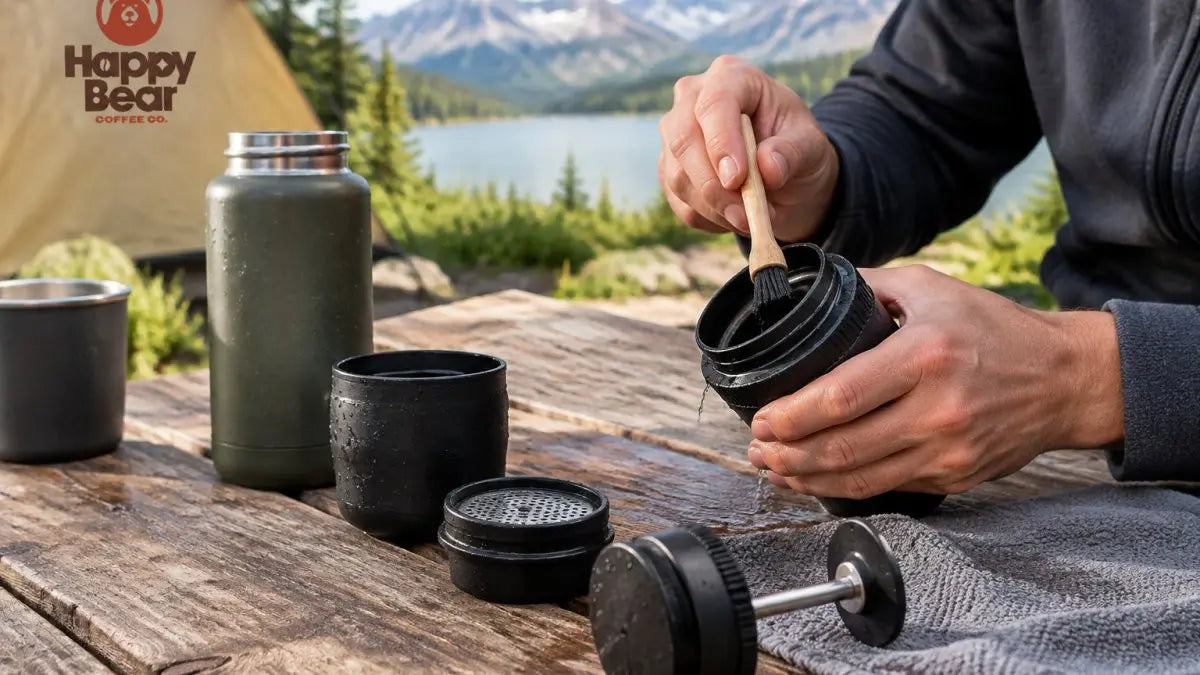
Portable coffee gear is easy to clean when the brewing method is simple, the parts come apart cleanly and running water is nearby. Cleanup effort depends more on the brewing method and the design of each piece. Rinsing parts right after each use keeps the job quick.
- Filterless designs are often the quickest portable brewers to clean.
- Empty grounds into a bag or compost spot, then rinse the chamber and plunger.
- Brewers with many small crevices can hold coffee oils, so rinse them right after use.
- Carry a small rinse bottle so you are not using drinking water for cleanup.
- Do a warm-water, mild-soap wash of contact surfaces weekly, and a deeper clean monthly.
Table of Contents
- How Cleanup Differs Across Portable Brewing Methods
- Cleaning the Brutrek French Press with Bru-Stop™
- Cleaning the OVRLNDR® Travel Coffee Press
- Cleaning the Collapsible Pour Over Coffee Maker
- Cleaning the Toddy® Go Brewer and Toddy Home Cold Brew System
- Cleaning Portable Coffee Gear When Water Is Scarce
- Best Portable Coffee Maker for Travel: Choosing by Cleanup Effort
- Best Portable Coffee Maker for Camping: Cleanup on the Trail
- Best Portable Coffee Method for Travel and Long-Term Upkeep
- Booking Your Next Brew Kit from Happy Bear Coffee
- Frequently Asked Questions
How Cleanup Differs Across Portable Brewing Methods
Portable coffee gear is easy to clean when the brewing method is simple, the parts come apart cleanly and you have running water nearby. Cleanup effort varies more between brewing methods than most shoppers expect, and the design of each piece matters as much as the method.
At Happy Bear Coffee, we group portable brewers by how the grounds are handled, because that single factor drives most of the mess. A French press keeps grounds in one chamber that you empty and rinse. A pour-over cone and a filterless brewer add a filter or mesh step. A cold brew vessel is mostly rinsing and drying.
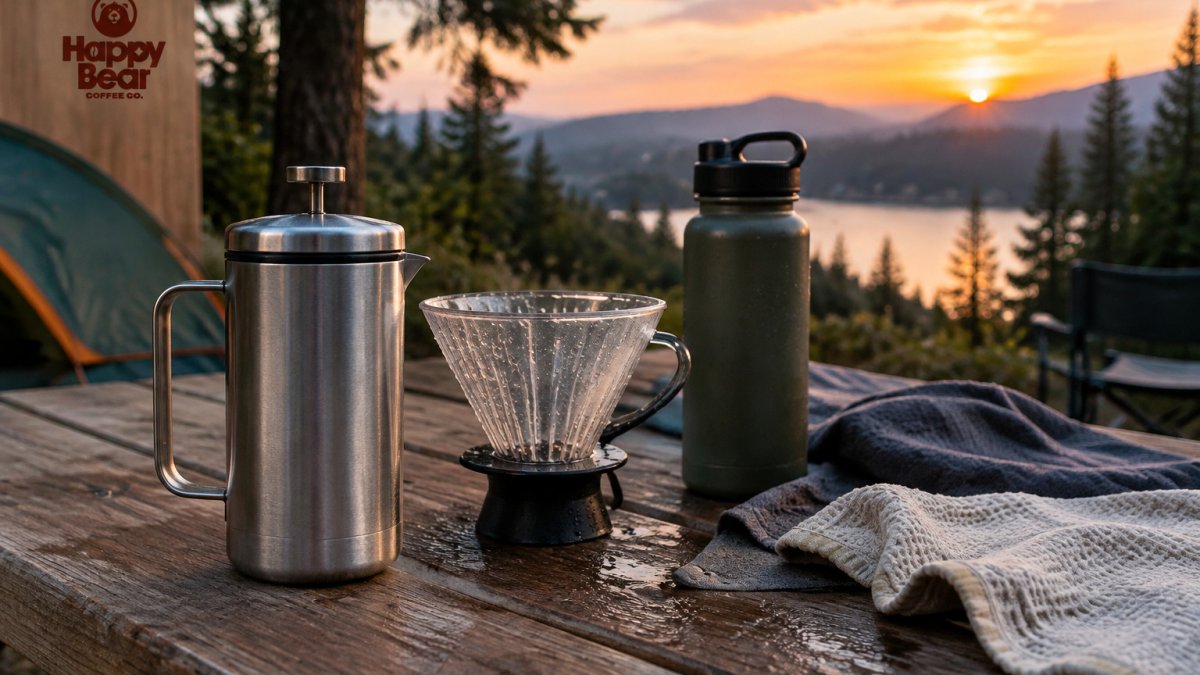
Filterless designs are often the quickest to clean. A brewer's geometry, not just its price, sets how much scrubbing you will do.
Watch out: brewers with many small crevices, such as those with multiple seals, can hold onto coffee oils. Rinse those parts right after use to prevent residue from building up.
The table below sums up how cleanup varies by brewer, based on the details covered in each section.
| Brewer | Cleanup step | Key detail |
|---|---|---|
| Brutrek French Press | Empty grounds, rinse plunger and chamber | Bru-Stop™ plate keeps grounds out of cup |
| OVRLNDR® Travel Press | Detach removable base, rinse both parts | Soft brush, no abrasives |
| Collapsible Pour Over | Tip grounds, rinse sock and cone | Reusable sock, no paper filters |
| Toddy® Go Brewer | Rinse vessel | Dishwasher-safe and BPA-free |
| Toddy Home Cold Brew | Discard filter bag, rinse container | Paper filter bags, silicone stopper |
Retail prices of featured portable coffee brewers
Cleaning the Brutrek French Press with Bru-Stop™
The Brutrek French Press with Bru-Stop™ is designed for straightforward use. After you pour, empty the grounds into a bag or a compost spot, then rinse the glass-free chamber and the plunger assembly with hot water. Its stainless steel construction is built for repeated use, and the Bru-Stop™ plate keeps grounds out of your cup.
Work the plunger up and down under running water to flush out fine particles. If you have no tap, pour a small amount of water through the chamber and shake it out, then dry the parts upside down.
You can find the press here: Brutrek French Press with Bru-Stop™. It retails for $69.00.

Cleaning the OVRLNDR® Travel Coffee Press
The OVRLNDR® Travel Coffee Press features a patented removable base for easy cleaning, and its sip and snap lid helps prevent spills.
Start by emptying the grounds, then detach the base and rinse both the chamber and the base under running water. Use warm water and a soft brush, and avoid anything abrasive on the interior surface.
Find the press here: Travel Coffee Press - OVRLNDR®. It is priced at $58.00.

Cleaning the Collapsible Pour Over Coffee Maker
The Collapsible Pour Over Coffee Maker uses reusable coffee socks instead of paper filters. There is no filter to throw away, so the main job is rinsing the cone and the sock.
After brewing, pull the sock, tip the grounds out, and rinse the sock and cone under water. Wring the sock out and let it air dry before you store it in the wax canvas bag. Dry the sock fully before packing to avoid odour.
Learn more about the setup here: Collapsible Pour Over Coffee Maker. It is priced at $50.00 and weighs only 6.5 oz.

Cleaning the Toddy® Go Brewer and Toddy Home Cold Brew System
The Toddy® Go Brewer is dishwasher-safe and BPA-free. The Toddy Home Cold Brew System uses paper filter bags and a silicone stopper, so most of the cleaning is discarding the filter bags and rinsing the container.
For either system, discard the spent filter, rinse the vessel, and let it dry open. The Toddy® Go Brewer is sized to accommodate most cold brew coffee pitcher packs and includes internal Brew and Fill lines.
You can explore the Toddy® Go Brewer here: Toddy® Go Brewer, priced at $43.00. The Toddy Home Cold Brew System is listed at $49.99.
Cleaning Portable Coffee Gear When Water Is Scarce
Water access changes how easy cleanup feels. When water is scarce, the goal is to remove grounds and oils with the least liquid possible, then save a full wash for when you are back at a tap.
Start with dry removal. Empty the chamber into a bag or compost spot and knock the screen or filter basket against a rock or the bag edge to dislodge packed grounds. A cut-down spatula or the back of a spoon scrapes the walls better than a finger. For a French press, pull the plunger assembly apart if the design allows and wipe the screen with a cloth before any water touches it.
Then do a two-stage rinse. Stage one is a swish: pour roughly 2 to 4 ounces of water into the chamber, cap it, shake for several seconds, and dump the cloudy water away from camp and away from water sources. Stage two is a wipe: use a dedicated rinse cloth or a few wet wipes to remove the oil film that a swish leaves behind. A final 1 to 2 ounces of clean water rinses the cloth-wiped surfaces. A minimal field cleanup can use only a few ounces of water, compared with a full running-tap rinse.
Method matters here. Brewers with fewer parts and no narrow screens generally need less water to clean than those with packing grounds and fine mesh.
Watch out: never dump soapy or grounds-laden water into a stream, lake, or at a campsite; strain the grounds out, pack them out or bury them per local land-manager rules, and broadcast the gray water well away from water sources.
Plan water before you leave. Carry a small dedicated rinse bottle so you are not dipping into drinking water. For more on making coffee in the backcountry, read How To Make Coffee While Backpacking. It covers how to plan water use before you leave.
Best Portable Coffee Maker for Travel: Choosing by Cleanup Effort
If cleanup is your top concern, choose a brewer with few parts and a wide opening.
For travel, a cold brew vessel or a collapsible pour-over with reusable socks usually requires the least effort. A French press is also manageable as long as you rinse it right after use.
Consider what you already own before buying new gear. A brewer you clean every morning is better than a fancier one that sits in the bag unwashed.
Best Portable Coffee Maker for Camping: Cleanup on the Trail
Camping adds two constraints: limited water and limited time at the end of a long day. Quick-release designs that let you push out grounds suit a campsite.
Our pick for camping is whichever brewer you can empty and wipe in under a minute. A French press with a fully removable plate or a pour-over with reusable socks both fit that goal. Browse the full range of Camping Travel Coffee Gear to compare options before you head out.
Best Portable Coffee Method for Travel and Long-Term Upkeep
Long-term upkeep matters as much as first-day cleanup. Coffee oils can build up over time, so inspect seals, screens and narrow passages regularly.
Set a cadence. Rinse every part after each use, do a warm-water and mild-soap wash of all contact surfaces once a week during daily use, and schedule a deeper clean monthly. For the deep clean, disassemble everything the design allows, soak the seals, screens, and filter mesh in warm water with a small amount of mild dish soap for 10 to 15 minutes, then scrub the mesh with a soft brush and run a pipe cleaner or a folded cloth through narrow passages. Rinse until the water runs clear and smell-free, and let all parts air-dry fully before reassembly.
Check the manufacturer's care instructions for each component before putting it in a dishwasher, and hand-wash seals and gaskets where possible.
Drying and storage prevent most odor problems. Mold and sour smells come from packing gear damp, so dry parts upside down on a rack or a cloth in sun and wind, and leave lids off overnight when you can. On multi-day trips, shake out and air-dry the brewer at lunch or during a rest stop rather than sealing it wet in the morning. Store reusable socks and cloth filters loose and dry, not balled up in a stuff sack.
Match the method to your upkeep tolerance. A collapsible pour-over with reusable socks has few parts and dries fast, which suits travelers who will not disassemble anything. A travel press with a removable base is easy to rinse but has more seals and a screen to maintain. A cold brew vessel is the lowest-maintenance option because it has no hot-water or pressure components and few crevices. Avoid storing any brewer while it is still damp, since that is the fastest route to odor.
Booking Your Next Brew Kit from Happy Bear Coffee
Portable coffee gear is easy to clean when you match the brewer to your routine, rinse parts right after use, and keep them dry before packing. Happy Bear Coffee carries travel presses, a collapsible pour-over coffee maker and cold brew systems. Shop the collection, choose the cleanup routine you will actually follow, and get your next brew on the road.
Frequently Asked Questions
Are portable coffee makers easy to clean?
Most portable coffee makers are straightforward to clean if you deal with the grounds right away. Filterless designs with small surface areas and wide openings tend to be easiest, because the grounds slide out and a quick rinse finishes the job. Models with narrow passages, multiple seals or fine mesh take longer. Rinsing with running water works best, and a soft brush helps with residue around seals and filter screens.
What is the easiest portable coffee maker to clean?
Filterless and simple-design brewers are generally easier to clean. The Collapsible Pour Over Coffee Maker from Happy Bear Coffee is priced at $50.00 and ships with reusable coffee socks, so there is no paper filter to throw away. The Toddy® Go Brewer is dishwasher-safe and BPA-free. The best choice depends on how much water you have and how you plan to brew.
Can you clean portable coffee gear without running water?
Yes, but it takes more steps. Knock out the grounds, wipe the interior with a paper towel or cloth, and rinse with a small measured amount of water. Save the rinse water for wiping, not for pouring down the drain at camp. Dry the parts fully before packing, since trapped moisture is the main reason gear smells after a trip.
How do you clean a portable coffee press while camping?
Empty the used grounds into a trash bag or a packable compost bag, not a sink or stream. Remove the plunger and screen, rinse each part with a small amount of water, and wipe the carafe with a cloth. Keep the screen and seals dry before reassembling. The Brutrek French Press with Bru-Stop™ is priced at $69.00, and the OVRLNDR® Travel Coffee Press, priced at $58.00, has a patented removable base to make cleaning easier.


댓글 남기기
이 사이트는 hCaptcha에 의해 보호되며, hCaptcha의 개인 정보 보호 정책 과 서비스 약관 이 적용됩니다.