
게시글: Specialty Coffee Brewing Gear for Beginners
Specialty Coffee Brewing Gear for Beginners
Table of Contents
- What You Actually Need: Essential Brewing Gear for Beginners
- Quick Comparison: Beginner Coffee Gear at a Glance
- Best Burr Coffee Grinder for Beginners: Why It Changes Everything
- Coffee Brewing Ratios for Beginners: The Math That Makes Better Coffee
- How to Brew Better Coffee at Home: A Step-by-Step Guide
- Manual vs. Electric Brewing Methods for Beginners
- Water Temperature and Kettle Selection
- Cleaning and Maintenance: Keeping Your Gear Working
- Troubleshooting Common Brewing Mistakes
- Sustainability and Waste Management in Coffee Brewing
- Frequently Asked Questions
Last Updated: September 23, 2026
What You Actually Need: Essential Brewing Gear for Beginners
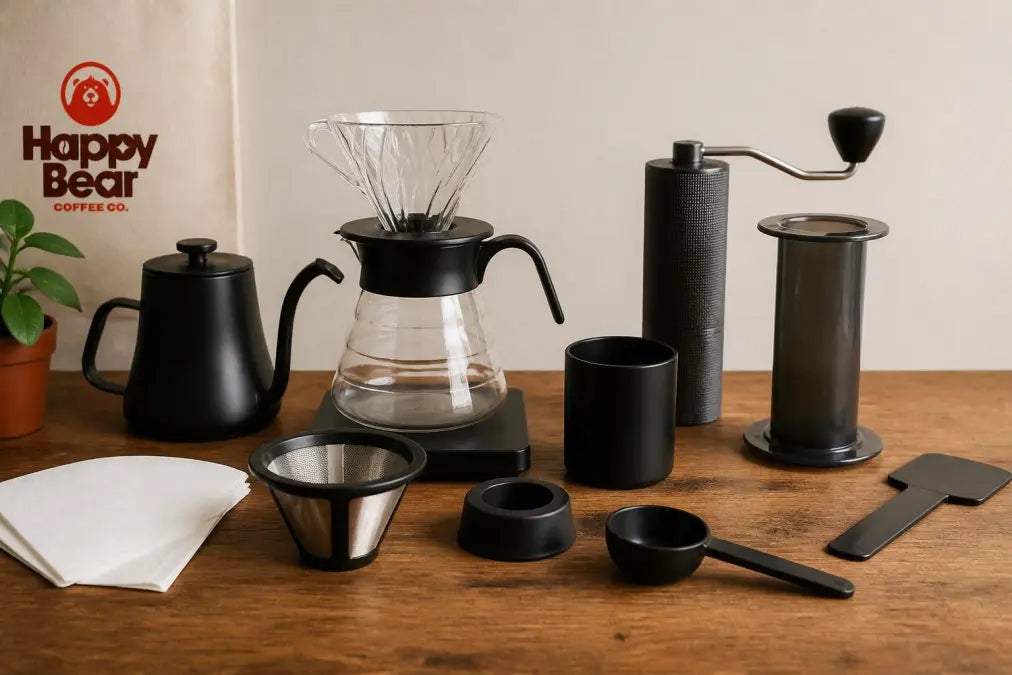
Specialty coffee brewing gear for beginners comes down to four pieces of coffee brewing gear: a burr grinder, a scale, a kettle you can control, and a brewer. Everything else is optional. At Happy Bear Coffee, we understand the temptation to buy a cabinet full of gadgets before owning the one tool that matters. The gear list below is short on purpose, because the gap between mediocre and excellent coffee at home is technique, not inventory.

A common mistake is buying a drip machine first and a grinder last. Flip that order. Grind quality decides how evenly water moves through the coffee bed, and no brewer can fix an uneven grind.
The Four Pieces That Matter Most
- Burr grinder - consistent particle size, adjustable for each brew method
- Digital scale - measures coffee and water by weight, not by scoop
- Temperature-controlled kettle - lets you hit a target water temperature and pour slowly
- Brewer - pour-over, French press, or cold brew, depending on the cup you want
Quick Comparison: Beginner Coffee Gear at a Glance
The table below maps each piece of gear to what it does and who it suits. Use it to decide what to buy first rather than buying everything at once.
| Gear | Price | What It Does | Best For |
|---|---|---|---|
| BruTrek Hand Coffee Grinder | $160.00 | Consistent burr grind, espresso to pour-over | Brewers who want one grinder for everything |
| Collapsible Pour Over Coffee Maker | $50.00 | Lightweight pour-over with reusable filter | Small kitchens and backpacking |
| Brutrek French Press with Bru-Stop | $69.00 | Full-immersion brew, keeps coffee hot for hours | Camping and shared pots |
| Toddy Home Cold Brew System | $44.95 | Cold water extraction, makes concentrate | Iced coffee and batch brewing |
| Airscape Coffee Canister - Classic | $37.50 | Removes oxygen to hold bean freshness | Anyone storing a pound at a time |
| Coffee Scoop - 2 Tbsp. | $9.00 | Measures a consistent dose | Backup measuring when no scale is handy |
Best Burr Coffee Grinder for Beginners: Why It Changes Everything
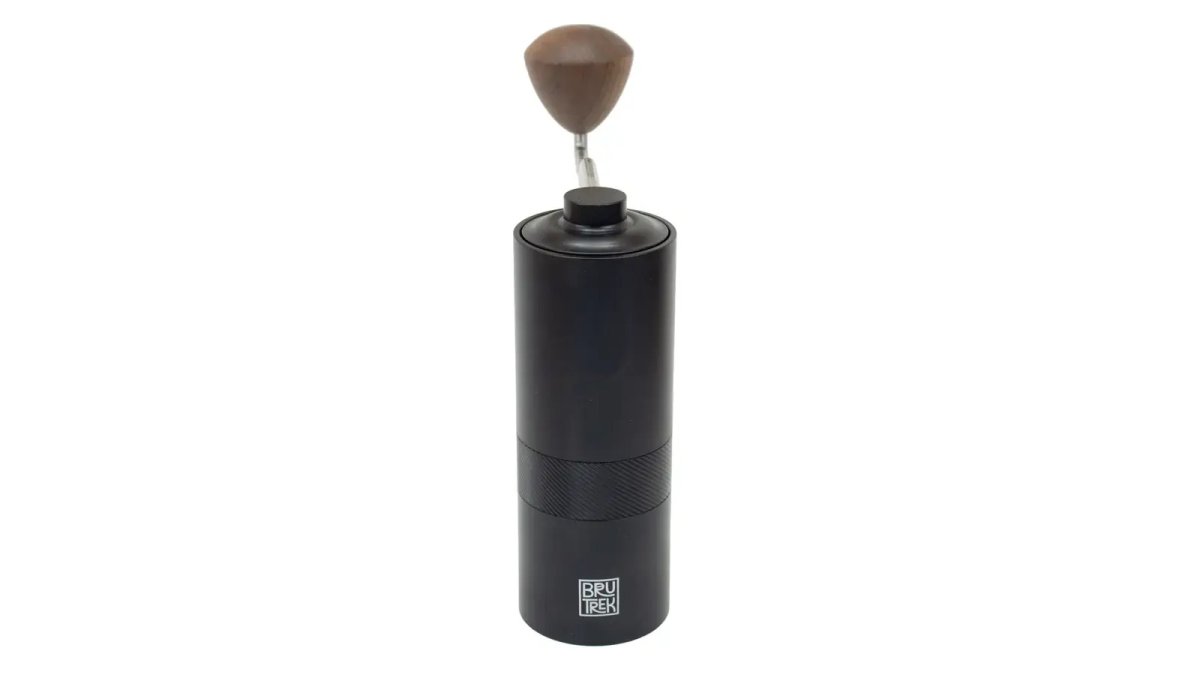
The best burr coffee grinder for beginners is a hand grinder with steel burrs and adjustable settings. It costs less than a comparable electric model, it won't wake the house at 6 a.m., and it forces you to learn what grind size actually does to a brew.

Blade grinders chop beans into a mix of dust and chunks. Water then drains through the dust fast and stalls in the chunks, so one cup tastes both bitter and sour. Burrs crush beans to a uniform size instead.
The [Specialty Coffee(https://blog.happybearcoffee.com/how-to-brew-specialty-coffee-at-home) Association's guidance on grinding | sca.coffee] treats grind consistency as a core variable in extraction, alongside time and temperature. That's the whole argument in one line.
The BruTrek Hand Coffee Grinder holds 32-40g of beans depending on density, covers espresso through pour-over with its adjusting gasket, and features a leveraged grind mechanism for an effortless grinding experience.
Blade vs. Burr: The Difference You'll Taste
Blade grinders produce uneven particles, which extract at different rates and create a muddy, inconsistent cup. Burr grinders produce a narrow range of particle sizes, so water extracts flavor evenly. The practical test: brew the same beans both ways and taste them side by side. Most people notice the difference on the first sip.
Coffee Brewing Ratios for Beginners: The Math That Makes Better Coffee
Coffee brewing ratios for beginners start with one number: 1:15 to 1:17, coffee to water by weight. That means 20 grams of coffee to 300-340 grams of water for a single mug. Weigh both. Volume scoops vary too much between roasts to trust.
The 15-15-15 Rule and Why It Works
The 15-15-15 rule is a starting recipe: 15 grams of coffee, 15 times that weight in water (225 grams), brewed in roughly 15 minutes for cold brew. It gives you a repeatable baseline, and you adjust one variable at a time from there.
Start with the ratio, then adjust grind. If the cup tastes sour and thin, grind finer. If it tastes bitter and drying, grind coarser.
How to Brew Better Coffee at Home: A Step-by-Step Guide
To brew better coffee at home, control four things: dose, grind, water temperature, and time. Get those roughly right and the cup improves immediately, even with basic gear.
- Weigh 15-20g of whole beans and grind them just before brewing
- Heat water to roughly 195-205F and let it settle for a moment off the boil
- Rinse your filter with hot water, then discard the rinse water
- Add grounds and start your timer as you pour
- Pour a small amount to saturate the grounds and wait 30-45 seconds
- Continue pouring in slow circles until you hit your target water weight
- Let it drain fully, then taste and adjust next time
The Bloom Phase Explained
The bloom phase is the first pour, when hot water hits fresh grounds and trapped carbon dioxide escapes as bubbles. Skipping it leaves part of the coffee bed dry and unevenly extracted. Pour about twice the coffee's weight in water, wait 30-45 seconds, then continue. Fresher beans bloom more, which is a useful freshness check.
Manual vs. Electric Brewing Methods for Beginners
Manual brewing gives you control over every variable, and electric brewing gives you speed and repeatability. Neither is better in the abstract. Pick by how you drink coffee on a normal weekday, not by how you imagine you'll drink it on a slow Sunday.
The real difference is where the machine stops and you start. With a manual method, you are the pump, the timer, and the thermostat. With an electric brewer, the machine handles some or all of those, and your job shifts to loading it correctly.
What Each Method Actually Controls
| Method | Who Controls Water Temp | Who Controls Pour | Typical Brew Time | Repeatability |
|---|---|---|---|---|
| Pour-over | You (kettle) | You | 2.5-4 min | Depends on your technique |
| French press | You (kettle) | Not applicable (full immersion) | 4 min steep + press | High, few variables |
| Electric drip | Machine | Machine | 5-8 min | High once dialed in |
| Cold brew | Not applicable | Not applicable | 12-24 hours | Very high |
Manual methods include pour-over and French press. They reward attention and cost less to start. Electric drip machines and automatic brewers handle the pour for you, which matters on busy mornings. The trade-off is that a cheap drip machine often brews below the 195-205F range, so the cup tastes flat no matter how good your beans are. Check the spec sheet before you buy.

How to Choose Without Regret
Ask three questions:
- How many cups at once? A pour-over dripper makes one or two. A French press makes three or four. A drip machine can make a full carafe.
- How much attention do you have at 6 a.m.? If the answer is 'none,' an electric brewer or a French press beats a pour-over you'll rush.
- Do you want to learn technique? Pour-over teaches you more per cup because you feel every variable. That's a feature, not a bug, for beginners who want to improve.
A common pattern is to start with a French press, then add a pour-over dripper once you've dialed in your grinder and ratio. You don't have to commit to one path.
For cold brew, the Toddy Home Cold Brew System uses time instead of heat to extract flavor, producing a concentrate you dilute to taste. The Toddy Go Brewer does the same job in a smaller, portable vessel that brews up to 25 ounces and works for hot drinks too.
Collapsible Pour Over Coffee Maker →
Water Temperature and Kettle Selection
Water temperature decides how fast flavor compounds leave the grounds. Most guidance points to 195-205F for hot brewing, and boiling water tends to scorch lighter roasts and pull out harsh, bitter notes.
The mechanism is simple: hotter water dissolves compounds faster. Push the temperature too high and you extract bitter, drying compounds before the sweet ones finish. Drop it too low and you leave the sugars behind, so the cup tastes sour and thin. The 195-205F window is where most roasts extract evenly.
How to Hit a Target Temperature Without a Thermometer
If you don't own a variable-temperature kettle, you can still brew well:
- Boil, then wait. After the kettle clicks off, 30-45 seconds of resting usually brings water into the 195-205F range. This is the oldest trick in the book and it works.
- Preheat your brewer. Rinse the dripper or French press with hot water first. A cold vessel drops your brew temperature by 10-15F in the first minute.
- Brew smaller batches. A large pour-over loses heat faster than a small one because more surface area is exposed.
Kettle Types and What They're For
| Kettle Type | Temperature Control | Pour Control | Best For |
|---|---|---|---|
| Stovetop gooseneck | None (you watch it) | Excellent | Pour-over on a budget |
| Variable-temp electric gooseneck | Precise (set to the degree) | Excellent | Pour-over, repeatability |
| Standard electric kettle | None | Poor (wide spout) | French press, cold brew prep |
| Pour-over kettle with thermometer | Read-only | Excellent | Beginners learning temperature |
A gooseneck kettle gives you a slow, steady pour, which matters for pour-over because a fast dump of water digs a hole in the coffee bed and causes channeling. Channeling is when water finds a single path through the grounds instead of saturating the whole bed, so part of the coffee over-extracts and part under-extracts in the same cup.
If you don't want a separate kettle, a variable-temperature electric kettle works fine. The goal is control, not brand. A stovetop gooseneck plus a $10 instant-read thermometer gets you 90% of the way there for a fraction of the cost.
For cold brew, temperature is a non-issue. Time does the work, and room-temperature water is fine.
Cleaning and Maintenance: Keeping Your Gear Working
Rinse every piece after each use and deep clean weekly. Coffee oils go rancid, and a dirty brewer will make fresh beans taste stale no matter how good your technique is.
- Grinder: brush out the burrs every few weeks; never rinse with water
- French press: disassemble the plunger and clean the mesh thoroughly
- Pour-over: rinse the dripper, and wash reusable cloth filters by hand
- Kettles: descale monthly if your water is hard
- Storage: keep beans in an airtight canister away from light and heat
The Coffee Sock Replacement filters are made from certified organic cotton and can last a year or more with a simple empty, rinse, and hang-dry routine. The Airscape Coffee Canister uses a patented inner lid to push oxygen out, which slows staling. If you buy in bulk, the Kilo size holds up to 2.5 pounds.
Troubleshooting Common Brewing Mistakes
Most bad cups trace back to one of five problems, and each has a fix you can apply on the next brew. Diagnose by taste first, then adjust a single variable.
| Problem | Likely Cause | Fix |
|---|---|---|
| Sour, thin cup | Under-extraction: grind too coarse, water too cool | Grind finer, raise water temperature |
| Bitter, drying cup | Over-extraction: grind too fine, brew too long | Grind coarser, shorten brew time |
| Weak but bitter | Uneven grind | Switch to a burr grinder |
| Watery, flat flavor | Wrong ratio | Weigh coffee and water, aim for 1:15-1:17 |
| Stale taste | Old beans or poor storage | Buy fresh, store airtight |
The mistake nobody warns you about is changing three variables at once. Change one, taste, then change the next. Otherwise you never learn what fixed it.
Sustainability and Waste Management in Coffee Brewing
Reusable filters cut waste more than any other single swap. A cloth or metal filter replaces hundreds of paper filters a year, and a reusable cold brew filter does the same for batch brewing.
Coffee grounds belong in compost, not the trash. They break down quickly and add nitrogen to soil. If you don't compost at home, many municipal programs accept them, and some garden centers take drop-offs.
Buying whole beans in larger bags reduces packaging per cup, and a proper storage canister keeps that larger bag fresh long enough to finish it. At Happy Bear Coffee, our 5% customer-powered donations program empowers customers, and our beans are sustainably sourced. The two habits that matter most: brew with a reusable filter, and compost what's left.
The hardest part of building a coffee setup isn't the gear list, it's resisting the urge to buy everything at once. Start with a grinder, a scale, and one brewer, then add pieces as you notice what's limiting your cup. Happy Bear Coffee stocks the full path, from the BruTrek Hand Coffee Grinder and Collapsible Pour Over Coffee Maker to the Toddy cold brew systems, plus freshly packed single-origin beans and customizable bundle subscriptions you can pause whenever you need to. Get started with Happy Bear Coffee and brew a better cup this week.
Frequently Asked Questions
What is the best coffee equipment for a beginner?
Start with four pieces: a burr grinder, a digital scale, a gooseneck kettle, and a pour-over dripper or French press. The BruTrek Hand Coffee Grinder ($160) uses stainless steel burrs for consistent grind size, while the Collapsible Pour Over Coffee Maker ($50) includes reusable coffee sock filters. A digital scale and gooseneck kettle give you control over coffee-to-water ratio and water temperature, which matter more than any single upgrade.
Do I really need a burr grinder for specialty coffee?
Yes, if you want consistent extraction. Blade grinders chop beans unevenly, producing a mix of fine powder and coarse chunks that brew at different rates. A burr grinder like the BruTrek Hand Coffee Grinder crushes beans to a uniform size, so water passes through evenly. That consistency is the difference between a bitter, muddy cup and one with clear tasting notes. The BruTrek grinder adjusts from espresso to pour-over.
Is a scale necessary for brewing specialty coffee at home?
A scale removes guesswork. For hot brewing, a common starting point is 1:15 to 1:17 coffee-to-water by weight. The Coffee Scoop - 2 Tbsp ($9) helps with volume measuring, but a digital scale gives you repeatable results every morning.
How much should a beginner spend on coffee brewing gear?
You can build a solid starter kit for under $200. The Collapsible Pour Over Coffee Maker costs $50 and includes two reusable CoffeeSock filters. The BruTrek Hand Coffee Grinder is $160 but lasts years and handles every brew method. If you prefer cold brew, the Toddy Go Brewer is $41.50. Add the Coffee Scoop at $9 and you have a complete setup without buying gear you will never use.
What is the difference between a blade and a burr grinder?
Blade grinders spin metal blades that chop beans into random sizes. Burr grinders crush beans between two abrasive surfaces set to a specific gap. The BruTrek Hand Coffee Grinder uses precision-engineered stainless steel burrs with adjustable settings from espresso to pour-over. Uniform particles extract at the same rate, so your cup tastes balanced instead of simultaneously bitter and sour. Burr grinders cost more upfront but eliminate the most common brewing mistake.

댓글 남기기
이 사이트는 hCaptcha에 의해 보호되며, hCaptcha의 개인 정보 보호 정책 과 서비스 약관 이 적용됩니다.