
게시글: Why Specialty Coffee Costs More: The Real Price Breakdown
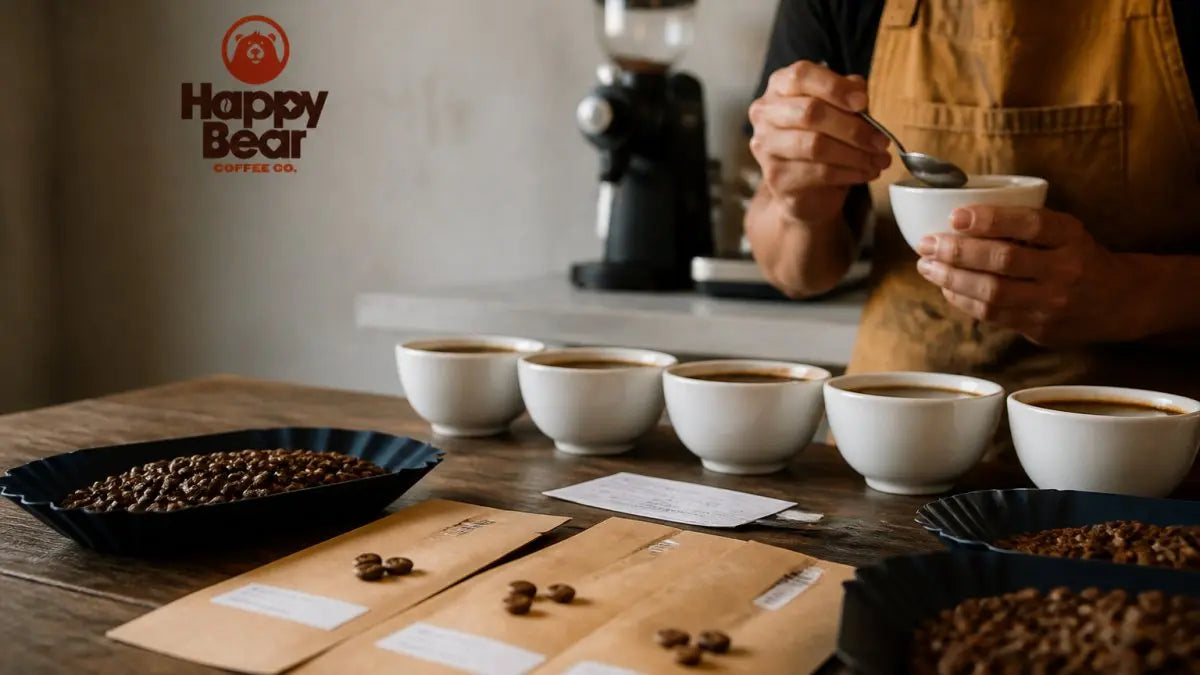
Why Specialty Coffee Costs More: The Real Price Breakdown
Table of Contents
- Why Specialty Coffee Costs More: The Full Picture
- The Specialty Coffee Price Factors That Drive Every Bag
- From Farmgate to Retail: A Transparent Price Breakdown
- Specialty Coffee vs Regular Coffee: What the Economics Show
- Direct Trade vs Fair Trade Coffee: How Sourcing Models Change the Price
- Weather, Climate, and Supply: Why Coffee Prices Keep Climbing
- Quality Grading and Cupping Scores: What You Actually Pay For
- Is Specialty Coffee Worth It? A Framework for Judging Value
- How to Evaluate Any Bag Before You Buy
- Frequently Asked Questions
Last Updated: October 15, 2026
Why Specialty Coffee Costs More: The Full Picture
Specialty coffee costs more because every step from seed to cup demands more money, more labor, and more risk than commodity coffee production. At Happy Bear Coffee, we source single-origin beans from smallholder farms and cooperatives, and that sourcing model carries real costs that commodity supply chains avoid. This guide breaks down exactly where your money goes.
The difference starts at the farm. A commodity coffee grower sells into a global market where prices swing on weather, currency, and speculation. A specialty grower cultivates specific varieties at high altitude, picks only ripe cherries by hand, and processes each lot with precision. That work costs more, and it shows up in your bag.
Below, we walk through the price factors that separate a $20 bag from a $62 reserve lot, using our own catalog as a reference point. We'll show you how to judge whether the premium is justified.
The Specialty Coffee Price Factors That Drive Every Bag
Specialty coffee price factors fall into two buckets: what happens on the farm and what happens after harvest. Both add cost that commodity coffee never carries.
Growing Conditions and Altitude
High-altitude coffee grows slower, develops denser beans, and concentrates sugars and acids that create complex flavor. Those conditions exist on steep hillsides where mechanized harvesting is impossible. A farm at 1,800 meters produces smaller yields per acre than a lowland plantation, and every pound costs more to grow.
Labor Costs and Selective Harvesting
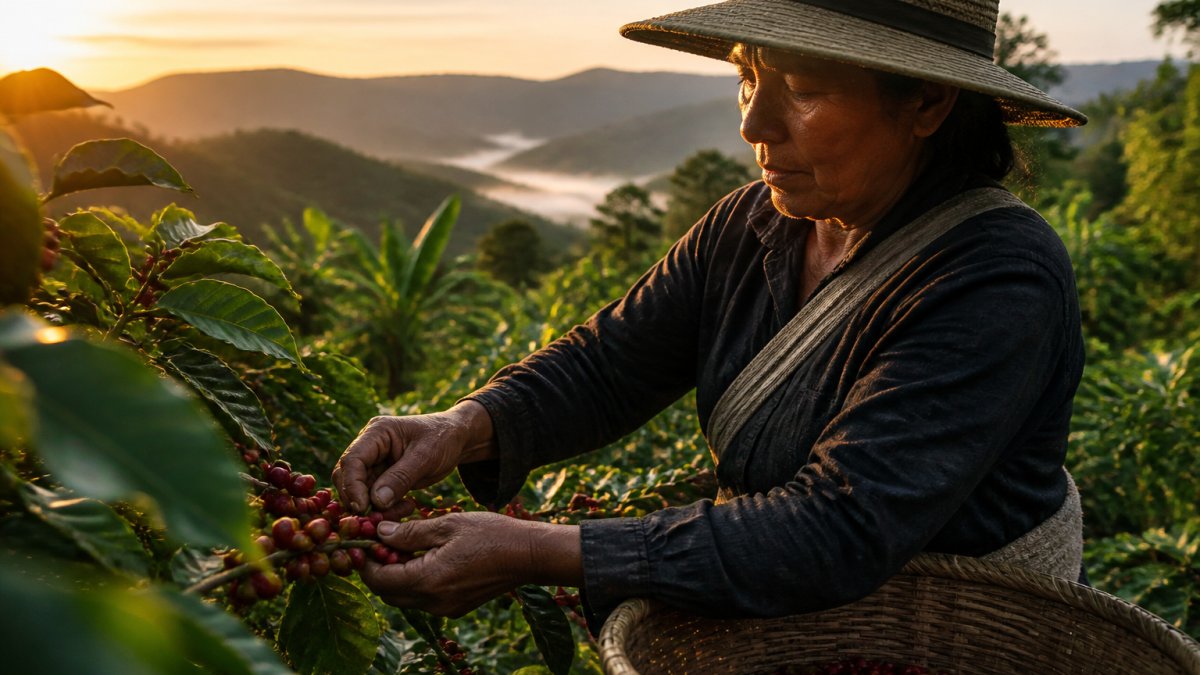
Selective harvesting means pickers return to the same tree multiple times, taking only cherries at peak ripeness. A commodity operation strips the branch once, ripe and unripe together. Hand-picking at altitude on a steep slope is slow, physical work, and it is the single largest cost in most specialty supply chains.
From Farmgate to Retail: A Transparent Price Breakdown
The farmgate price is what a producer receives for raw green coffee at the farm or mill. Everything after that, milling, export, shipping, import, roasting, packaging, and retail margin, stacks on top. Most articles describe these stages in general terms. Here is what each one actually does to the number.
Here is a simplified breakdown of how a $20 bag of single-origin coffee gets priced:
| Stage | What Happens | Share of Retail Price |
|---|---|---|
| Farmgate | Grower sells green coffee | 15-25% |
| Milling and export | Processing, grading, export prep | 5-10% |
| Shipping and import | Ocean freight, customs, warehousing | 5-10% |
| Roasting | Roast, rest, quality control | 10-15% |
| Packaging | Bags, labels, valves | 5-8% |
| Retail and margin | Marketing, fulfillment, profit | 30-50% |
Those ranges are wide on purpose, because the split depends on the lot, the origin, and the roaster's business model. A few mechanisms explain why.
Farmgate. Green coffee loses roughly 15 to 20 percent of its weight during roasting, so a roaster buying a pound of green coffee does not get a pound of sellable beans. That shrink is one reason the farmgate share looks small relative to the finished bag: the producer is paid on green weight, and the roaster sells roasted weight. A producer who receives a higher farmgate price per pound is not automatically receiving a larger share of the retail bag, because the retail bag reflects a different weight and a long chain of added costs.
Milling and export. After harvest, the coffee is milled to remove the dried fruit or parchment layer, graded for defects and screen size, and prepped for export in marked bags with lot documentation. Export prep includes phytosanitary certificates and origin paperwork. These are fixed costs per lot, which means they hurt small lots disproportionately: a 10-bag micro-lot and a 300-bag container pay many of the same fees.
Shipping and import. Ocean freight is priced per container and fluctuates with fuel and global logistics conditions. Import adds customs brokerage, warehousing, and sometimes financing costs while the coffee sits before it moves to a roaster. A roaster who buys small quantities pays more per pound here than a large importer moving full containers.
Roasting. Roasting is where the green coffee becomes the product, and it carries equipment, gas or electricity, labor, and the loss from roast development and quality control. A roaster also discards or discounts batches that do not hit the target profile, and that waste is a real cost.
Packaging. One-way valve bags, labels, and small-batch packing all cost more per unit than bulk packaging. A 12-ounce bag uses nearly as much packaging material as a 16-ounce bag, so smaller bags carry a higher packaging cost per ounce.
Retail and margin. This is the widest range because it includes marketing, fulfillment, subscription infrastructure, and profit. A roaster selling direct absorbs shipping and customer service; a roaster selling through grocery or cafes gives up margin to the retailer.
The farmgate share is the number that matters most for farmer income, but it is not the same as farmer profit. A producer's costs, labor, inputs, processing, and transport to the mill, come out of that farmgate payment. A higher farmgate price does not automatically mean a better margin if the producer's costs rose at the same time. When a roaster publishes the farmgate figure alongside the retail price, you can judge whether the premium reaches the people growing the coffee, and you can ask the more useful question: what did the producer keep after costs?
Specialty Coffee vs Regular Coffee: What the Economics Show
The two markets are not the same product at different prices. They are priced by different mechanisms, and that difference explains most of the gap in your cup.
Commodity coffee trades on futures exchanges, where the price is set by global supply expectations rather than by any single farm's quality. A commodity buyer typically purchases by grade and defect count, blends across origins to hit a target cost, and treats coffee as an ingredient. Specialty coffee is priced lot by lot, against cup quality, with the buyer often tasting before committing. That single structural difference cascades through everything downstream.
| Dimension | Commodity Coffee | Specialty Coffee |
|---|---|---|
| How price is set | Futures market plus a negotiated differential | Negotiated per lot, anchored to cup quality |
| Quality standard | Defect count and grade | Cupping score, commonly 80+ on the 100-point scale |
| Sourcing unit | Blended across farms, regions, sometimes countries | Traceable to a farm, cooperative, or washing station |
| Harvest method | Strip-picked, ripe and unripe together | Selective hand-picking across multiple passes |
| Buyer relationship | Often anonymous, through intermediaries | Frequently direct, with multi-year relationships |
| Consistency mechanism | Blending to a flavor target | Lot selection and roast profiling |
Traceability is the cost that commodity supply chains avoid entirely. Keeping a lot separated from farm to roaster means separate milling runs, separate bags, separate shipping containers, and documentation at every handoff. A commodity container can commingle coffee from dozens of sources because no one needs to know which farm contributed which pound. A specialty lot cannot, and the administrative and logistical overhead of that separation is baked into the retail price.
Island Bear - Jamaican Blue Mountain 100% →
The quality standard itself carries cost. Cupping scores are assigned by trained graders using standardized protocols, and a lot that scores below the specialty threshold cannot be sold as specialty regardless of how it was grown. That creates a sorting cost: a farm may grow excellent coffee and still see part of its harvest fail to qualify, and the qualifying portion has to carry the economics of the whole crop.
Blending is the other quiet cost difference. Commodity buyers blend to a price and a flavor target, which lets them substitute origins when one becomes expensive. Specialty roasters who commit to a single-origin lot cannot substitute without changing the product, so they absorb price shocks rather than swapping them away. That inflexibility is a feature for the drinker and a cost for the roaster.
Direct Trade vs Fair Trade Coffee: How Sourcing Models Change the Price
Fair Trade coffee sets a minimum price floor and a certification premium, verified by a third-party certifying body. Direct trade coffee skips the certification layer and builds a direct relationship between roaster and producer, often paying above the Fair Trade floor for specific quality.
Both models raise costs relative to commodity buying. Fair Trade adds certification fees and administrative overhead. Direct trade adds travel, relationship-building, and the risk of paying premium prices for a lot that underperforms in the cup. Roasters absorb that risk, and it shows up in retail pricing.
Weather, Climate, and Supply: Why Coffee Prices Keep Climbing
Weather patterns and climate change are squeezing coffee supply. Drought, frost, and erratic rainfall in major growing regions reduce crop yield, and disease pressure from pests like coffee leaf rust spreads as temperatures shift. When a key origin has a bad harvest, global supply tightens and prices rise across the board.
Coffee supply and demand sit on a knife's edge because coffee is grown in a narrow band of tropical highlands. A single frost event in a major producing region can wipe out a season's crop. Climate change is making those events more frequent, and researchers tracking coffee agriculture warn that suitable growing regions are shifting. The USDA Foreign Agricultural Service coffee reports publish annual production data that shows how supply shocks move the market.
A roaster who never adjusts prices is either absorbing shrinking margins or quietly swapping in cheaper beans. If your favorite bag tastes different this year at the same price, ask what changed in the blend.
Quality Grading and Cupping Scores: What You Actually Pay For
A cupping score is a standardized quality rating from licensed graders, scored on a 100-point scale. Coffee scoring 80 or above qualifies as specialty. Higher scores reflect cleaner cup quality, more distinct flavor notes, and fewer defects.
The score drives price because it predicts consistency. A lot scoring 86 with clear fruit and floral notes commands a premium over an 82 with a solid but simple profile. Rare lots, limited production runs, and competition-winning coffees push higher still, because supply is tiny and demand from roasters is intense.
Is Specialty Coffee Worth It? A Framework for Judging Value
Specialty coffee is worth it when the premium buys something you can taste and verify. Use this framework to judge any bag before you commit:
- Does the bag name the farm, cooperative, or washing station?
- Is the roast date printed, not just a best-by date?
- Does the roaster publish the cupping score or tasting notes with specificity?
- Can you find the farmgate price or sourcing model on their site?
- Does the flavor match the price tier, or are you paying for packaging?
If you can answer yes to three or more, the premium is likely doing real work.
How to Evaluate Any Bag Before You Buy
Evaluating a bag takes two minutes if you know what to look for. Start with the roast date, then work backward through the label.
- Check the roast date. Freshly roasted coffee peaks within two to four weeks.
- Read the origin detail. Single-origin with a named producer beats a vague regional blend.
- Look for process information. Washed, natural, and other processing methods change flavor and cost.
- Match the roast level to your brewing method. A light roast for pour-over, a medium roast for drip.
- Compare price per ounce, not price per bag. A 12-ounce reserve lot and a 16-ounce blend are not the same purchase.
At Happy Bear Coffee, our reserve line, including the Island Bear Jamaican Blue Mountain, shows what a genuinely limited lot costs when traceability and certification are built in. Our Specialty Coffee Association standards membership means our grading language follows the same cupping protocols used across the industry.

The challenge with specialty coffee is that the premium is invisible unless you know what to look for. Happy Bear Coffee makes it visible: sustainably sourced single-origin beans, freshly packed and delivered to your door, with customizable bundle subscriptions you can pause or adjust, and a 5% donation program that puts part of every purchase back into the community. Shop our reserve and single-origin lineup to taste what the premium actually buys.
This guide from Happy Bear Coffee reflects our sourcing approach and the standards we hold our coffees to.
Frequently Asked Questions
Why does specialty coffee cost more than regular coffee?
Specialty coffee costs more because every step from farm to bag demands greater care. Farmers hand-pick only ripe cherries, use selective harvesting, and process beans with methods that protect flavor. Growing at high altitudes limits crop yield per tree. Quality grading and cupping scores above 80 points add verification costs. Then there are import, transport, roasting, and packaging expenses. Each stage adds to the final retail price, but the result is a traceable, better-tasting cup with fewer defects than commodity coffee.
How does ethical sourcing affect the price of coffee?
Ethical sourcing raises the farmgate price paid to growers. Direct trade relationships often pay a premium above commodity market rates, sometimes 20 to 50 percent more, to cover sustainable farming costs and farmer compensation. Fair Trade certification sets a minimum price floor and adds a social premium. Those costs carry through the supply chain. When you buy from a roaster that publishes its sourcing practices, part of what you pay goes directly to the people growing the coffee.
Is specialty coffee worth the extra cost?
Whether specialty coffee is worth it depends on what you value. If you drink coffee daily and notice differences in sweetness, acidity, and body, the premium buys a measurably better cup. Specialty beans are graded above 80 points, traceable to a specific farm or cooperative, and roasted to highlight origin flavors. If you mainly drink coffee for caffeine or add milk and sugar, a lower-cost option may suit you. The key is to judge value by what you actually taste, not just the price tag.
Does direct trade coffee cost more than Fair Trade coffee?
Direct trade coffee often costs more at retail because roasters pay farmers above-market premiums and invest in long-term relationships, quality training, and traceability. Fair Trade coffee sets a minimum price floor and adds a fixed social premium, which provides stability but may not reflect the full quality premium a specialty roaster is willing to pay. Both models raise farmer income compared to commodity pricing, but direct trade typically involves fewer intermediaries and higher transparency about where the money goes.


댓글 남기기
이 사이트는 hCaptcha에 의해 보호되며, hCaptcha의 개인 정보 보호 정책 과 서비스 약관 이 적용됩니다.