
7 Steps to Maintain Your Coffee Brewing Equipment
Quick Summary
Maintain your coffee brewing equipment by cleaning it after every use, deep cleaning removable parts weekly, and flushing the system to remove coffee oils. Descale to remove mineral buildup, and follow your manufacturer's schedule for each device.
- Wipe down and rinse anything that touched the coffee right after every brew.
- Wash the carafe, lid and filter basket in warm soapy water at least once a week.
- Run plain-water brew cycles weekly to flush out coffee oils.
- Descale to remove limescale, then run several rinse cycles of clean water.
- Never rinse a burr grinder with water, since moisture rusts steel burrs.
Table of Contents
- Why Regular Maintenance Keeps Your Coffee Tasting Right
- Step 1: Clean Your Equipment After Every Use
- Step 2: Clean the Carafe, Filter Basket, and Removable Parts
- Step 3: Flush the Brewing System and Remove Coffee Oils
- Step 4: Descale to Remove Mineral Buildup
- How to Clean Espresso Machine With Vinegar Safely
- How to Clean Coffee Machine Nespresso Models
- Coffee Equipment Maintenance Schedule by Frequency
- Troubleshooting Common Maintenance Problems
- Booking in Your Next Maintenance Routine With Happy Bear Coffee
- Frequently Asked Questions
Why Regular Maintenance Keeps Your Coffee Tasting Right
Last Updated: November 14, 2026
Coffee brewing equipment does more than make your morning drink. Left alone, it collects coffee oils, residue and mineral buildup that quietly change how your coffee tastes. A clean setup helps a good bean taste the way it should. This guide walks you through seven steps to maintain your coffee brewing equipment, from daily wipe-downs to descaling and troubleshooting.
Coffee oils are the main culprit. Each brew leaves a thin film on the carafe, the filter basket and the brew chamber. Over time, that film turns rancid and gives your coffee a bitter, flat taste. Mineral buildup, often called limescale, adds another problem. It slows water flow and can affect how hot your brew gets.
Regular cleaning protects two things: flavor and equipment life. Most home brewers can prevent these issues with a short routine and a simple schedule.
Step 1: Clean Your Equipment After Every Use
The fastest way to protect your coffee is to clean up right after brewing. Wipe down the outside of the machine and rinse anything that touched the coffee.
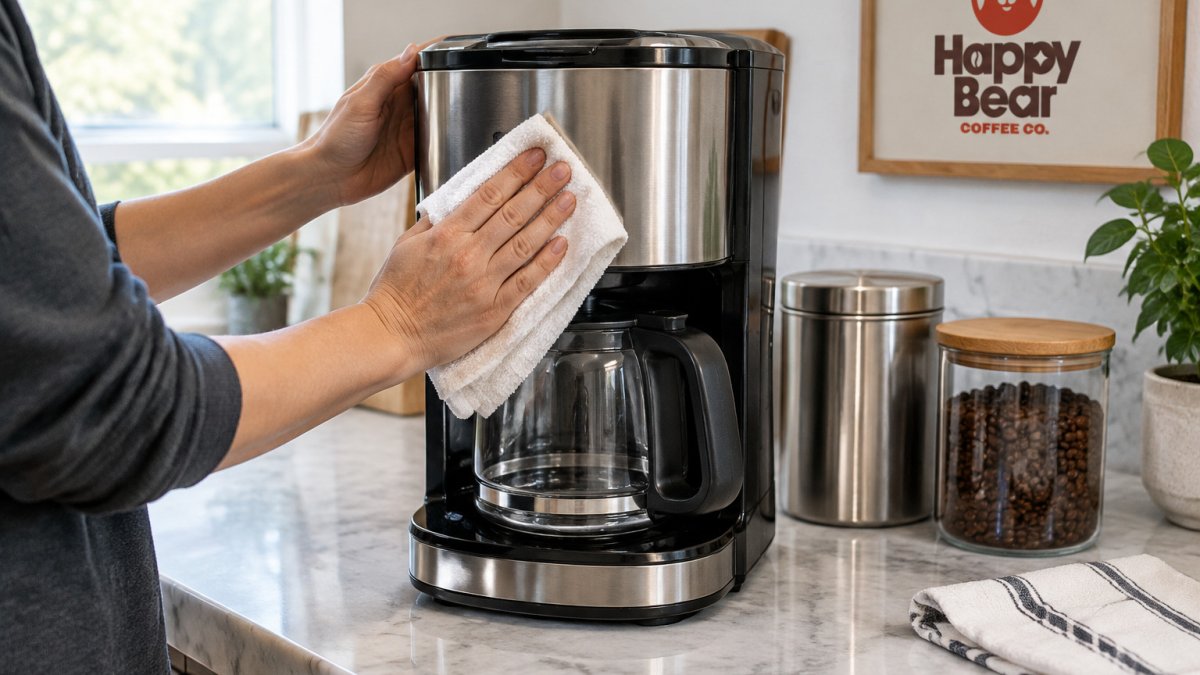
Start with these quick tasks:
- Dump used grounds and rinse the filter basket
- Wipe the drip area and drip tray
- Rinse the carafe or serving vessel with warm water
- Wipe the steam wand after each use, then purge it before and after use
Air dry removable parts on a rack. Trapped moisture can encourage mold and odors. A few minutes after each brew saves you a long scrub later.
Step 2: Clean the Carafe, Filter Basket, and Removable Parts
Removable parts hold the most residue, so give them a deeper clean at least once a week. Use warm water and a mild dish soap. Scrub gently with a soft brush or sponge.
Work through this checklist:
- Wash the carafe, lid and filter basket in warm soapy water
- Scrub stubborn stains with a soft brush
- Rinse every part thoroughly
- Let all parts air dry completely before reassembling
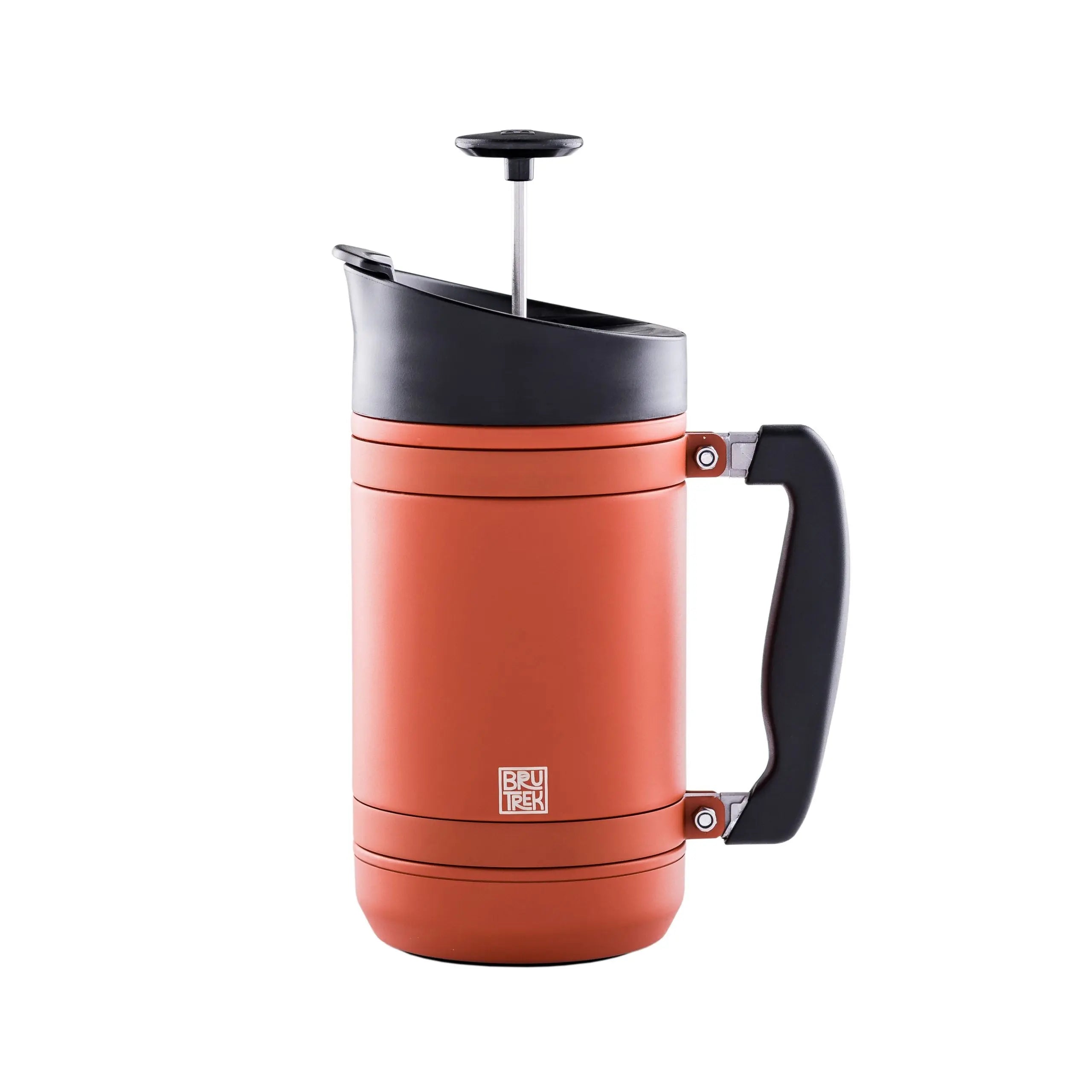
A French press needs similar care. The Brutrek French Press with Bru-Stop™ features a Bru-Stop™ Plate that keeps grounds out of your cup, so check that the plate is free of grounds before you store it.
Step 3: Flush the Brewing System and Remove Coffee Oils
Coffee oils build up inside the brewing system, not just on the surface. Flushing clears out what your cleaning routine misses.
Run a brew cycle with plain water and no coffee grounds. Repeat it once or twice to rinse the system. Flushing is most useful once a week for daily drinkers. It keeps oils from turning rancid and protects the taste of your next cup.
Grinder care and burr maintenance
Grinders are the most overlooked piece of brewing equipment. Old grounds and oils coat the burrs, and stale residue in the chute flavors every subsequent dose.
- Empty the hopper and brush out loose grounds weekly with a stiff brush or the brush that came with the grinder.
- Clean the burrs monthly, or per manufacturer instructions. Remove the top burr, brush both burr faces, and clear the chute before reassembling.
- Never rinse a burr grinder with water. Moisture rusts steel burrs and cakes in the chute.
- Recognize worn burrs by inconsistent grind size, longer grind times, or a hotter smell during grinding.
Manual brewing equipment
Manual brewers need the same oil removal as automatic machines, with a few material-specific cautions.
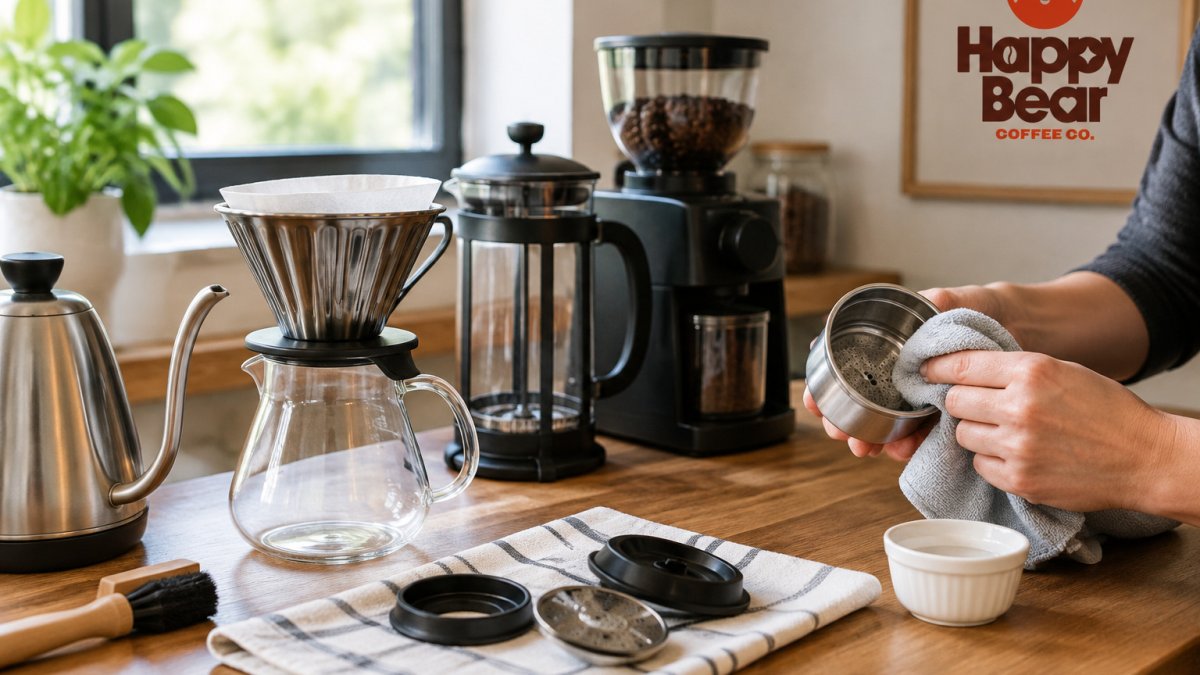
- Pour-over drippers: Rinse the dripper and carafe after every brew. Wash glass and ceramic drippers in warm soapy water weekly; rinse plastic drippers promptly so oils do not stain them.
- Reusable metal or cloth filters: Rinse after every brew and deep clean weekly. Cloth filters should be boiled occasionally to remove oils.
- French press: Rinse the beaker, plunger and screen after every use, and wash all parts in warm soapy water. Check that the press screen is free of grounds before storing.
- Kettles: Descale the kettle regularly, following the manufacturer's guidance on water hardness and descaling method.
For cold brew equipment, rinse the brewing container, handle, filters and decanter with warm water after each batch. Wash the silicone stopper and filter bags, then let everything dry before storing.
Watch out: do not put glass carafes or French press beakers in a dishwasher unless the manufacturer says they are dishwasher safe, since thermal shock can crack them.
Step 4: Descale to Remove Mineral Buildup
Mineral buildup, or limescale, forms when hard water evaporates and leaves minerals behind. Hard water makes descaling more important, but even soft water leaves some deposits over time.
Follow your machine's manufacturer instructions for descaling. Most descaling solutions are designed for coffee machines, and the manual will tell you how often to run a cycle and how much solution to use. After descaling, run several cycles of clean water to rinse out any remaining solution.
Watch out: never skip the rinse cycles after descaling. Leftover descaler can change the taste of your coffee and may be harmful to drink.
How to Clean Espresso Machine With Vinegar Safely
Many home brewers ask whether white vinegar is a good descaler. It can work on some espresso machines, but you need to be careful. Check your manual first, because some manufacturers warn against vinegar.
If your manual allows it, mix equal parts white vinegar and water and run the mixture through the machine. Then run several cycles of plain water to remove every trace of vinegar. Vinegar's smell and flavor can linger, so rinse until the water runs clear and smells neutral.
Do not use vinegar on parts that the manufacturer says to avoid. When in doubt, choose a descaler made for espresso machines.
How to Clean Coffee Machine Nespresso Models
Nespresso machines need a regular cleaning routine to keep brewing well. Empty and rinse the used capsule container after each use. Wipe the drip tray and the capsule holder.
For descaling, use the descaling solution recommended by Nespresso and follow the on-screen prompts. Run a rinse cycle with fresh water when the process is done. Keep the water tank clean by refilling it with fresh water every day.
Coffee Equipment Maintenance Schedule by Frequency
A single frequency table hides the fact that a drip brewer, an espresso machine, a grinder and a French press each need different care at different intervals. If you use portable gear, you can check how easy portable coffee gear is to clean before building your routine. Use the equipment-specific schedule below as a starting point, then adjust it to your water hardness and how many cups you brew per day.
Drip coffee maker
| Task | Frequency |
|---|---|
| Rinse carafe and filter basket | After every brew |
| Wipe drip tray and exterior | After every brew |
| Wash carafe, lid and basket in warm soapy water | Weekly |
| Run a plain-water brew cycle to flush | Weekly |
| Descale with a coffee-machine descaler | Every 1-3 months, or when the descale light comes on |
| Deep clean the water reservoir and lid | Monthly |
Espresso machine
| Task | Frequency |
|---|---|
| Purge and wipe the steam wand | After every use |
| Flush the group head with a blank shot | After every session |
| Backflush with detergent | Weekly, if your machine supports backflushing |
| Soak the portafilter and basket | Weekly |
| Descale | Every 1-3 months, per manufacturer instructions |
| Replace the group-head gasket | When it hardens or leaks, typically every 1-2 years |
Grinder
| Task | Frequency |
|---|---|
| Brush out the grind chute and hopper | Weekly |
| Clean the burrs | Monthly, or per manufacturer instructions |
| Inspect burrs for wear | Every 6-12 months |
Manual brewers (pour-over, French press, kettle)
| Task | Frequency |
|---|---|
| Rinse the dripper, carafe and reusable filter | After every brew |
| Wash the French press parts in warm soapy water | After every use |
| Deep clean the reusable filter and press screen | Weekly |
| Descale the kettle | Every 1-3 months, depending on water hardness |
Two variables should move these intervals. First, water hardness: if your tap water leaves visible scale on a kettle within a few weeks, descale on the shorter end of every range. Second, brew volume: a household pulling several espresso shots a day will need weekly backflushing and more frequent descaling than a once-a-week brewer. If you use portable gear, follow the same rule of cleaning after each use, since fine grounds collect quickly in small spaces.
Watch out: manufacturer instructions override any generic schedule. If your manual specifies a descale interval or a cleaning product, follow it to protect your warranty.
Troubleshooting Common Maintenance Problems
Some problems show up even with regular care. Here is how to handle the most common ones:
- Bitter or off-tasting coffee: Coffee oils or old residue are often the cause. Run a full cleaning and flush cycle.
- Slow brewing: Mineral buildup may be restricting water flow. Descale your machine.
- Weak or lukewarm brew: Limescale can also affect heating. Descale and check the heating element for buildup.
- Musty smell: Trapped moisture is the likely cause. Dry all parts fully and clean the water reservoir.
- Unusual taste after descaling: Leftover descaler is the probable reason. Run more rinse cycles with fresh water.
If a problem continues after cleaning, check your manual or contact the manufacturer before trying repairs.
Booking in Your Next Maintenance Routine With Happy Bear Coffee
Keeping your equipment clean is easiest when you plan it. Set a weekly reminder for flushing and deep cleaning, and a monthly one for descaling. A short routine protects your coffee and your gear.
Happy Bear Coffee is here to help you keep every cup at its best. Browse our brewing methods to find equipment that fits your routine, and see the Brutrek French Press with Bru-Stop™. Your coffee tastes better when your equipment is clean, so start your routine today.
Frequently Asked Questions
How do I maintain my coffee machine?
Wipe the outside and drip area after each use, empty and rinse the carafe and filter basket daily, and replace or wash the water reservoir regularly. Run a clean water cycle weekly to flush residue from the brewing path, and descale on the schedule in your manufacturer's manual. Most manuals call for descaling every one to three months, depending on how hard your water is. Keeping a simple log of when you last cleaned and descaled makes it easy to stay on track and spot problems early.
Can I run vinegar through my coffee maker to clean it?
Yes, many home drip brewers can be descaled with a diluted white vinegar solution, but check your manual first because some manufacturers advise against it. Run the solution through a full brew cycle, then follow with two or three cycles of plain water to rinse out any vinegar taste. Avoid using vinegar on machines whose manuals specify a branded descaler, and never leave the solution sitting in the machine for long periods.
How often do coffee machines need to be serviced?
Light cleaning should happen after every use, while descaling typically falls every one to three months depending on water hardness and how often you brew. Follow the service interval in your owner's manual, since that is the most reliable guide for your specific model.
How do I clean a Nespresso coffee machine?
Empty and rinse the used capsule container and drip tray after each use, and wipe the outside with a damp cloth. Run a rinse cycle with fresh water without a capsule to clear the brewing path. Nespresso recommends descaling with its own descaling solution at intervals set by the machine, so follow the prompts or indicator light on your model rather than improvising with other products.




Leave a comment
This site is protected by hCaptcha and the hCaptcha Privacy Policy and Terms of Service apply.